
The Quiet Architecture of Living
A portrait documentary of João Rodrigues, creator of Silent Living
Hospitality isn’t the first thing João Rodrigues, the founder of Silent Living, talks about. Instead, our conversation begins with family.
He remembers growing up in a home where neighbours, friends and extended family were always welcome. Guests never arrived empty-handed, nor did they leave without being offered something to take with them. It wasn’t considered hospitality. It was simply how life was lived.
Looking back, João sees those moments as the foundation of everything he and his wife, Andreia, have created together.
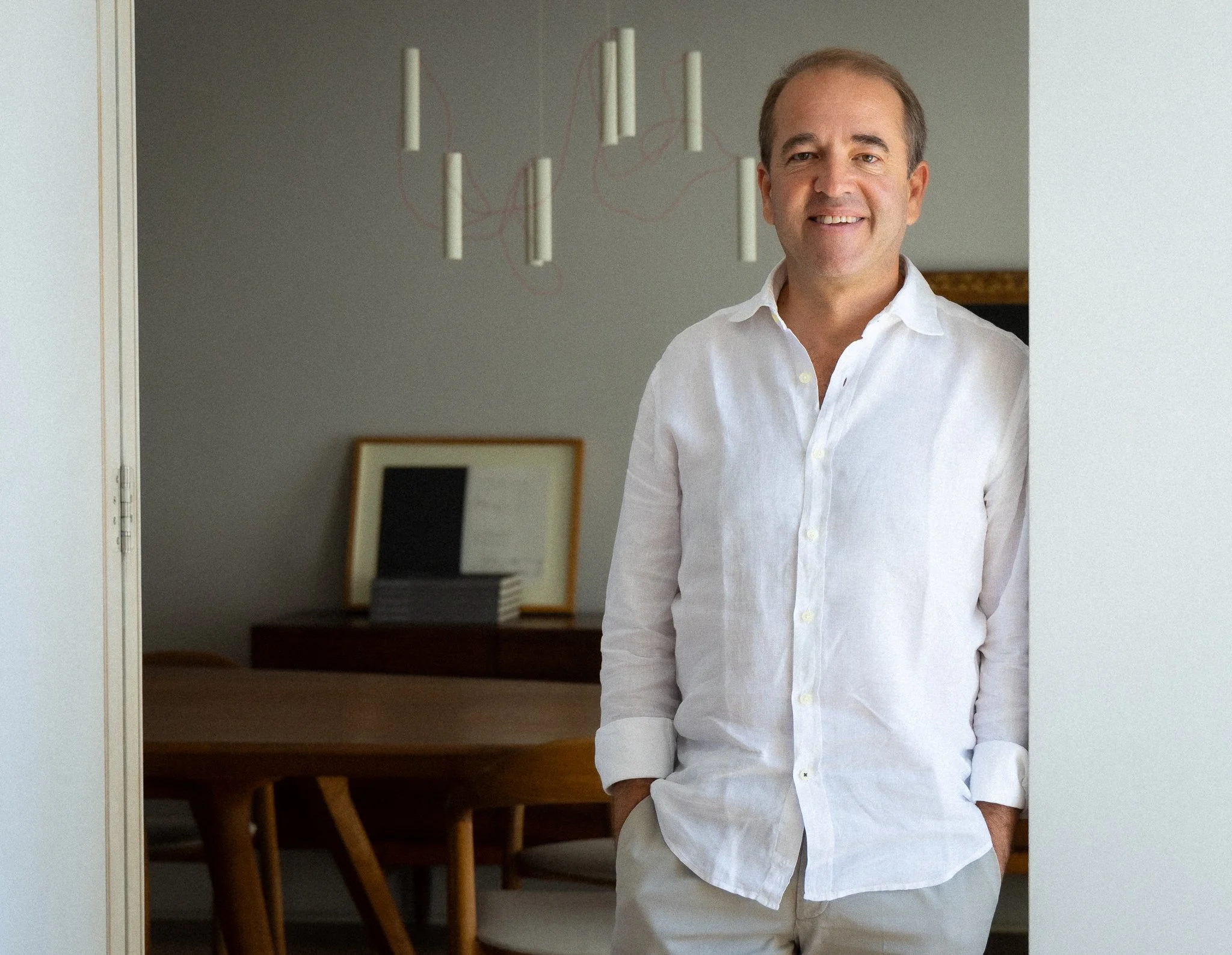
João Rodrigues
“We didn’t really have a plan of opening a hospitality business,” he tells us. “It happened accidentally.”
Today, that unexpected idea has grown into Silent Living, a collection of houses and hotels across Portugal that has quietly become known for its architecture, thoughtful design and deeply personal approach to hospitality. Yet, as our conversation unfolds, it becomes clear that the buildings themselves are only part of the story.
The philosophy came first.
“We have always felt the need to provide a home away from home for travellers, rather than just a roof over their heads.”
That philosophy is perhaps most evident at Santa Clara 1728, where João and Andreia live with their family above the hotel itself.
“For me, it makes life very, very easy because while I’m at home, I can just go down a few stairs and I’m with my guests.”
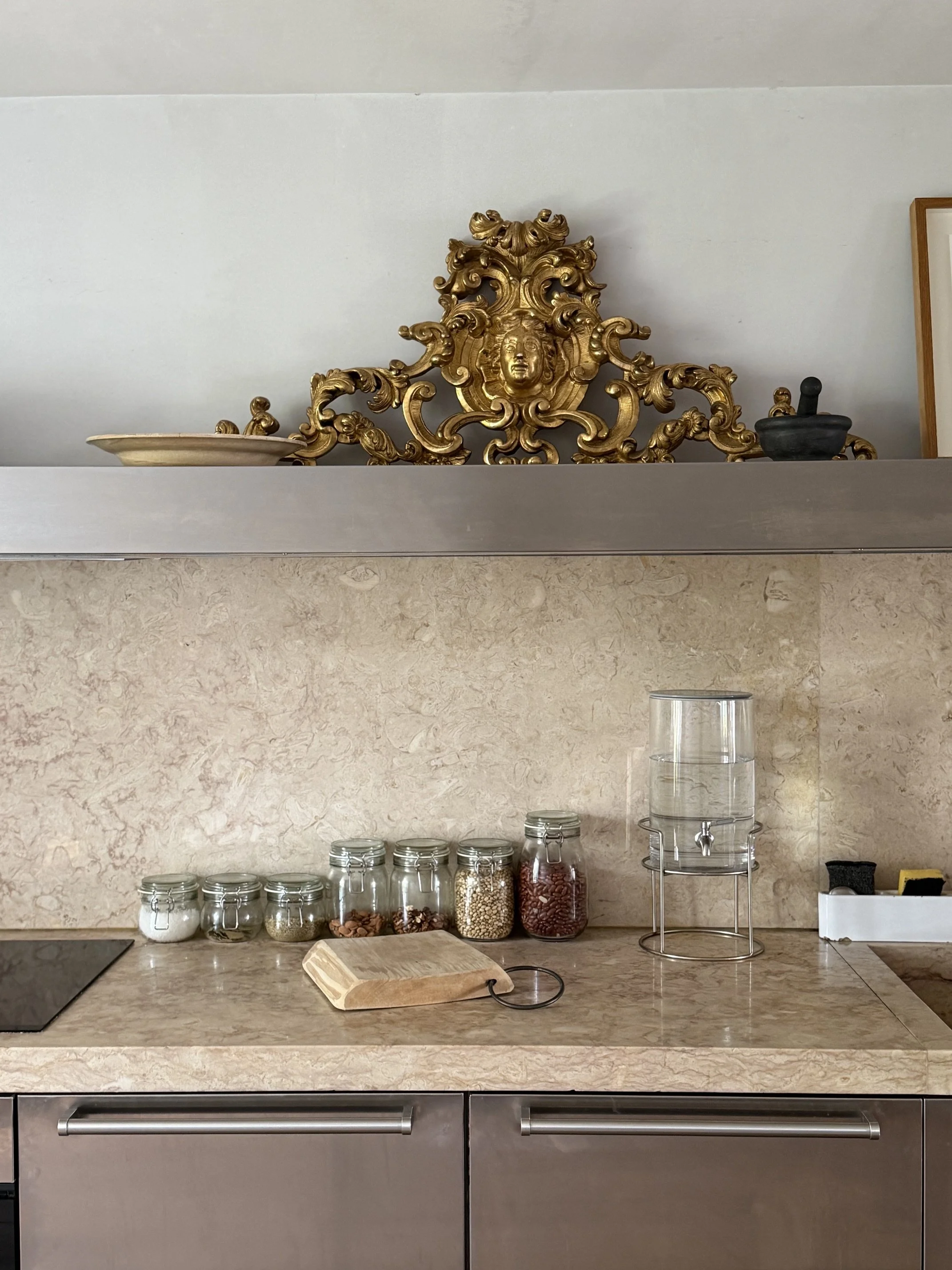
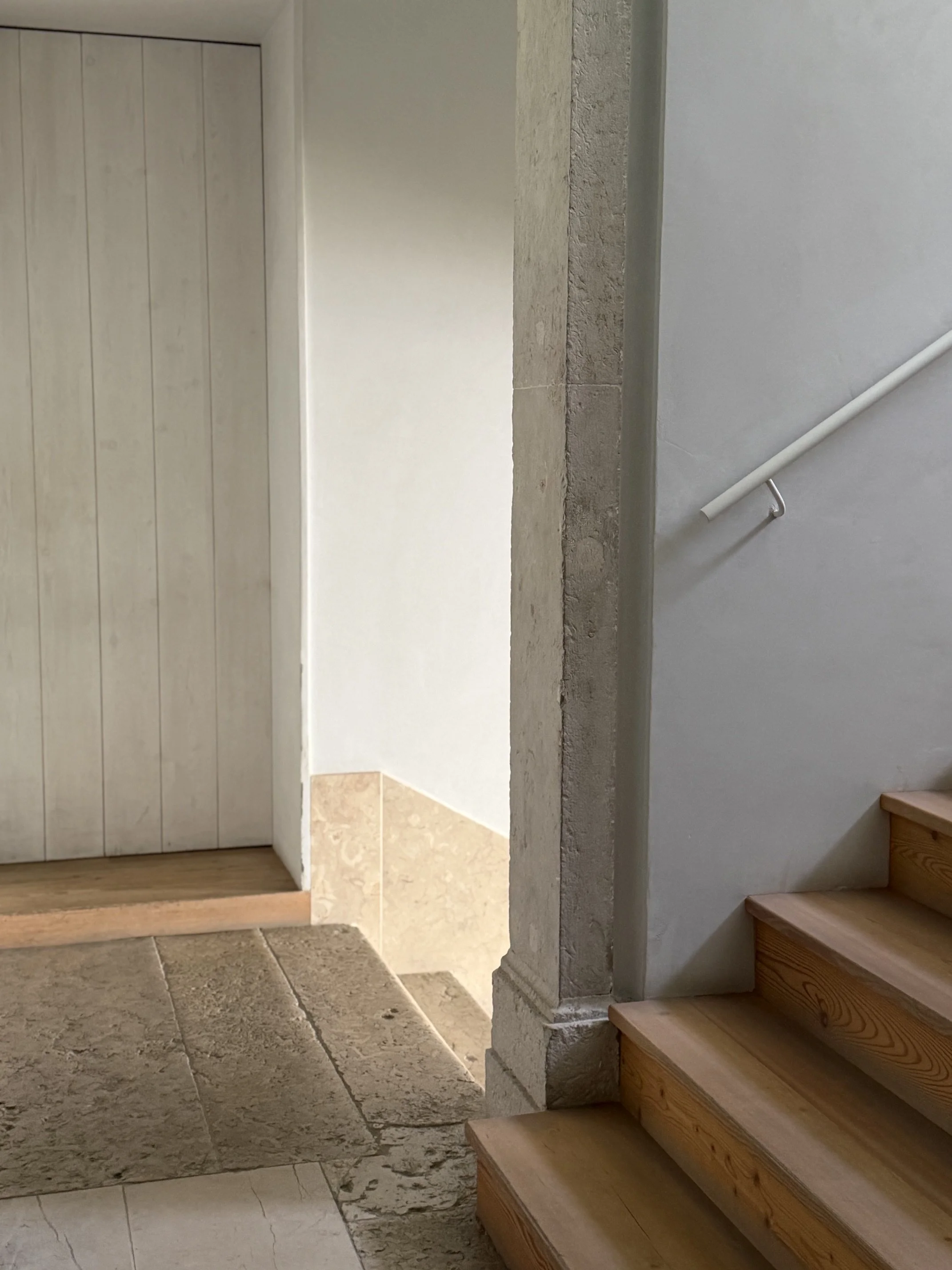
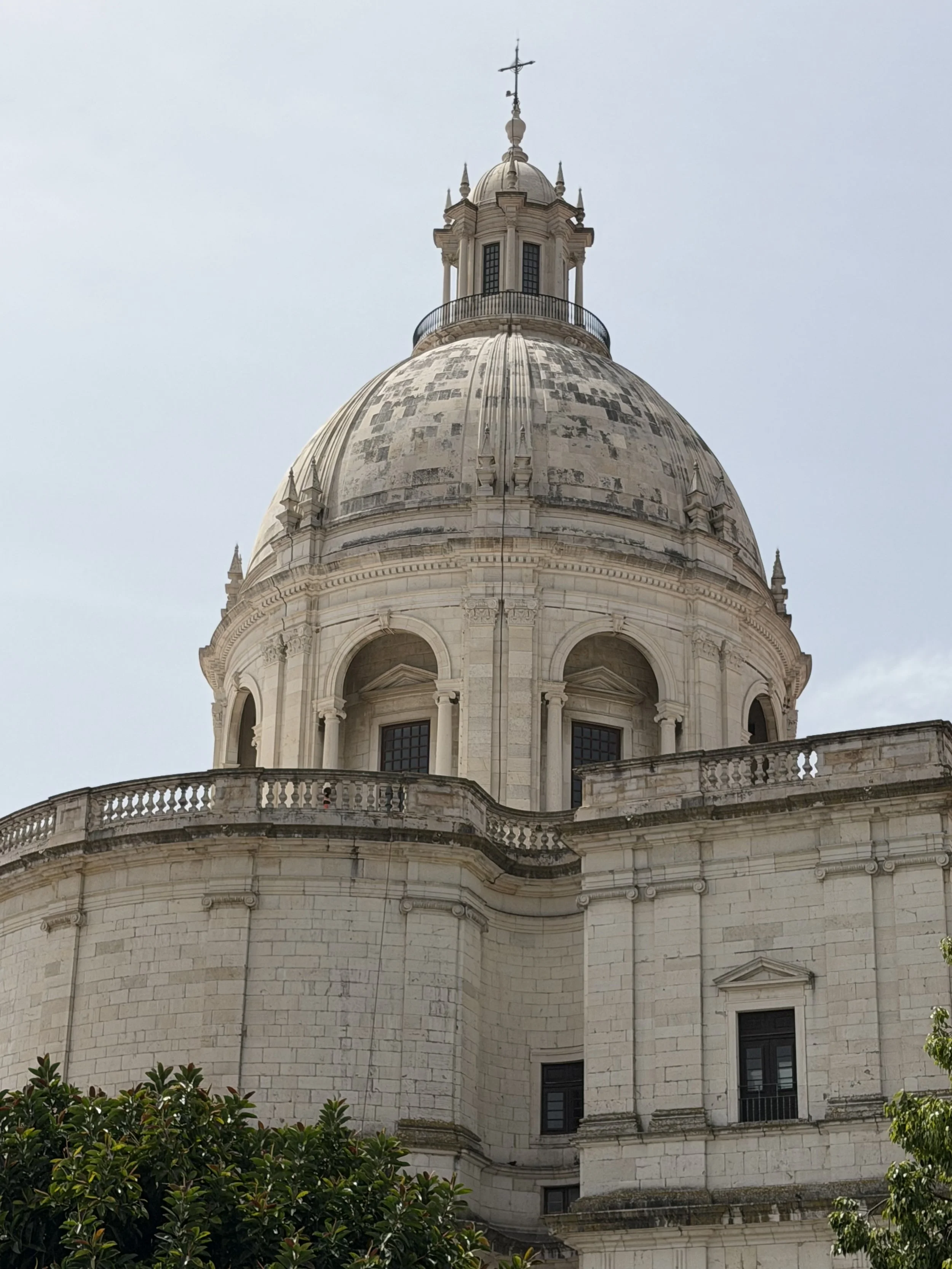
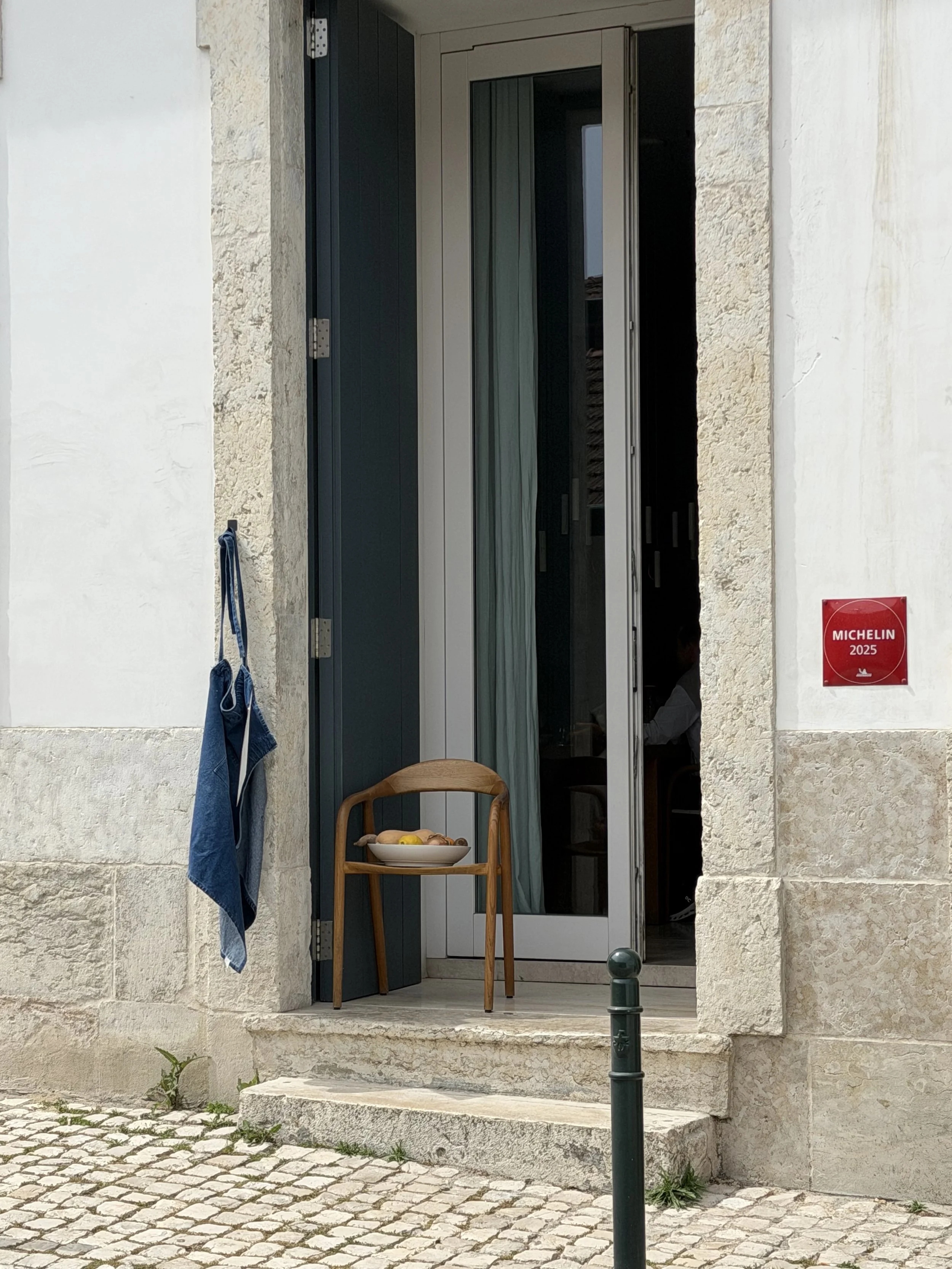
There is little separation between home and work, and that is entirely intentional. Guests are welcomed into the same building where family life continues quietly upstairs. The boundaries between host and hotelier become almost invisible.
As we talk, it becomes clear that hospitality is only one part of João’s story. Again and again, the same ideas return.
Generosity.
Simplicity.
A respect for craftsmanship.
And a deep relationship between people and place.
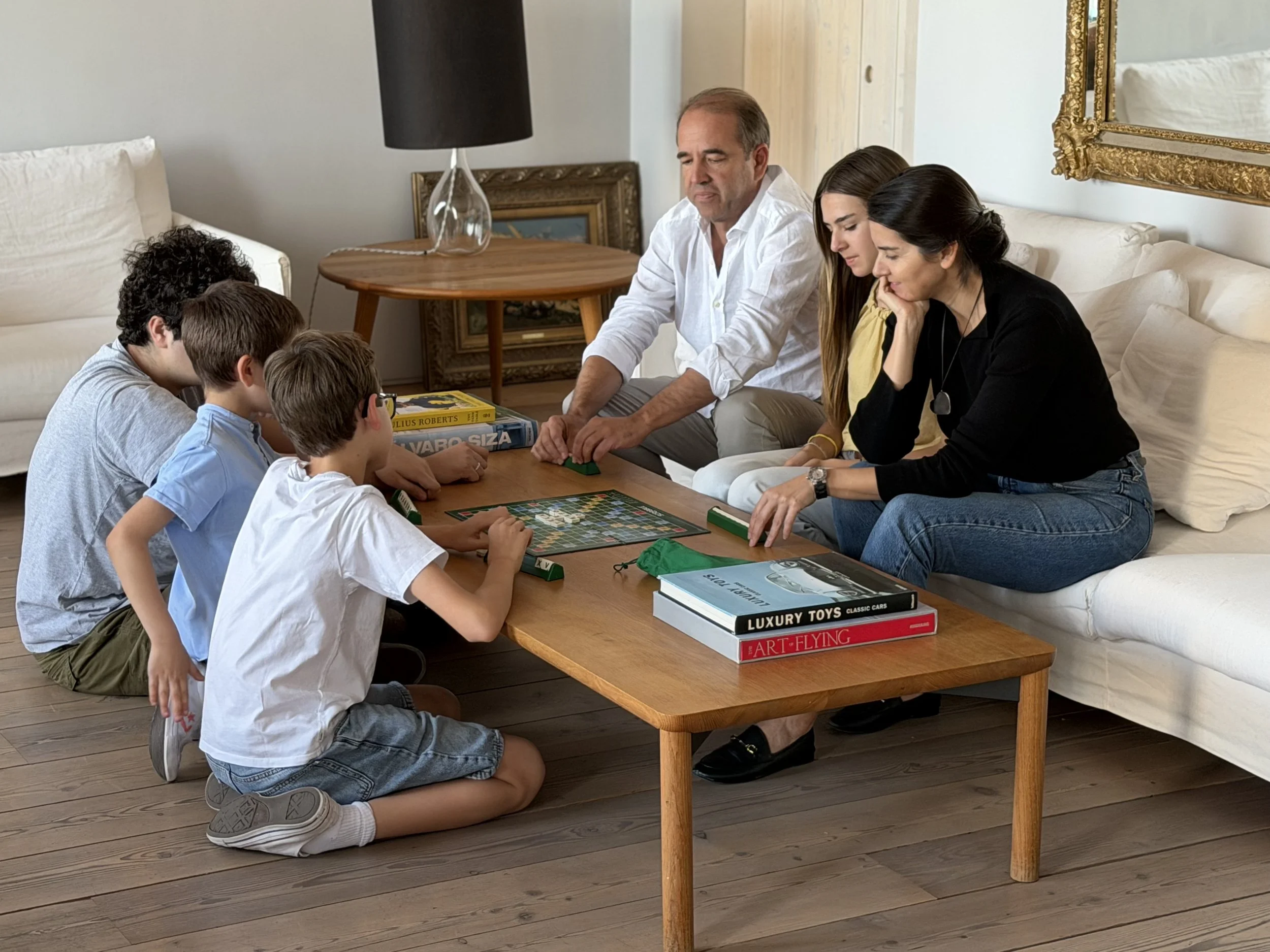
“Our aim at Silent Living is this: How can we touch people’s lives during their stay? How can we leave a seed in their lives once they leave?”
It is a question that quietly underpins everything Silent Living has become. The story, however, begins long before Santa Clara. It begins in Comporta.
Nearly twenty years ago, João and Andreia built a weekend house for their own family overlooking the rice fields, pine forests and the Sado Estuary. It was never intended to become a hospitality business. It was simply somewhere to spend time together. Then something unexpected happened.
The house, Casas na Areia, was selected to represent Portugal at the Venice Biennale of Architecture. International attention followed.
“So we thought,” João says with a smile, “let’s start renting it out.”
What began as an experiment slowly revealed something much bigger. People weren’t simply looking for somewhere to stay. They were responding to the feeling the place created.
“Architecture tries to answer a problem,” João says. “It shouldn’t just be a functional answer. There should be something emotional about it.”
That idea would quietly shape every project that followed.
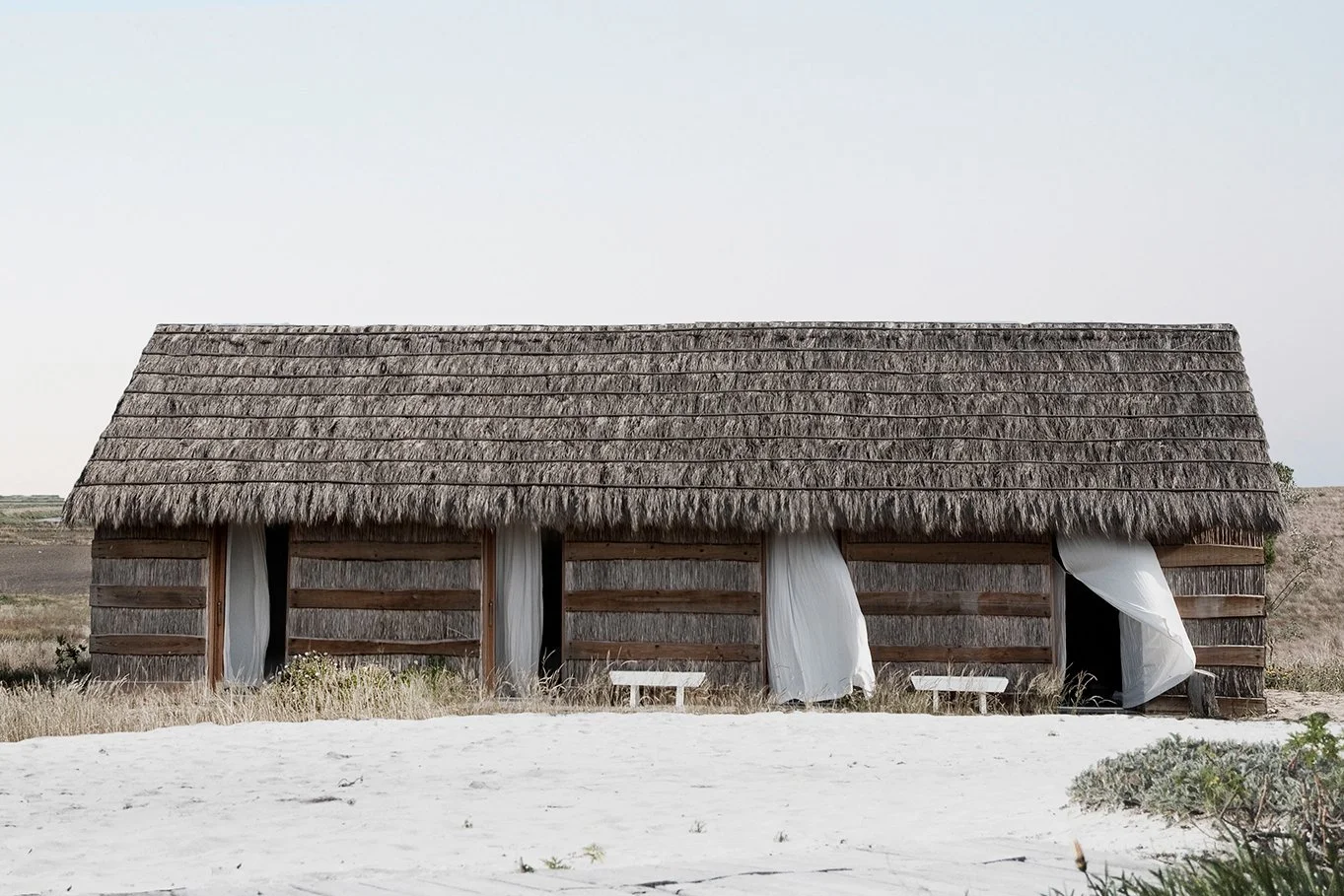
Casa na Areia - Photo: Silent Living by Renée Rae, Tim Reed and Silje Kvernerland
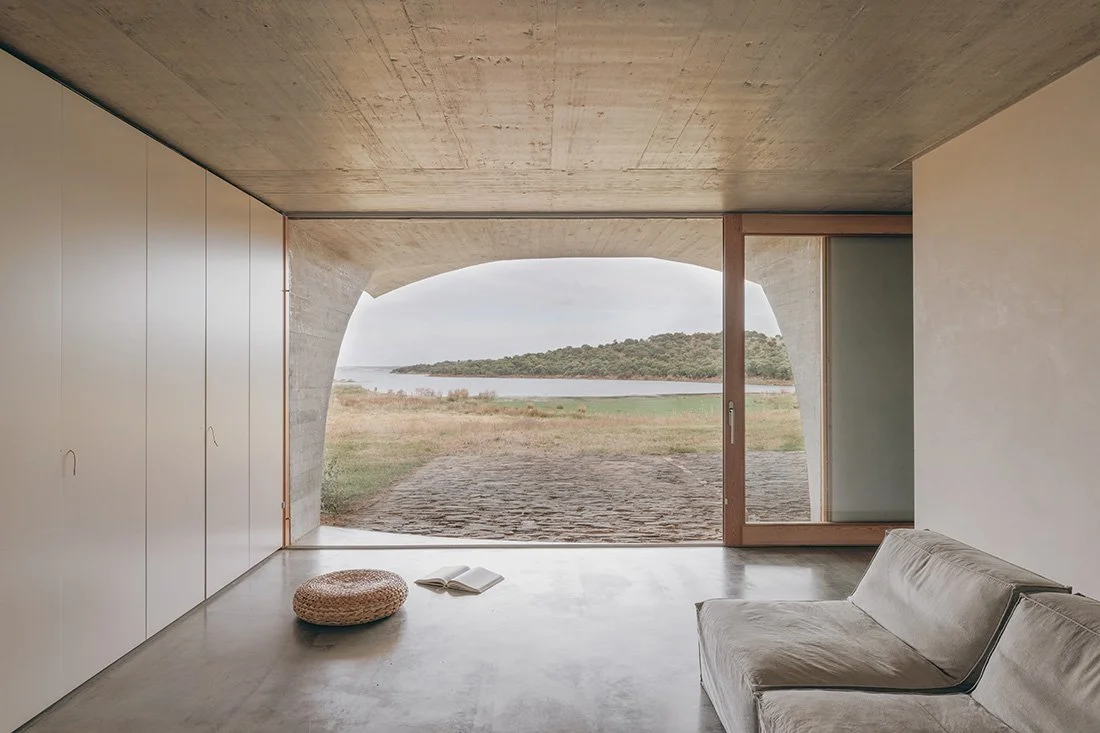
Casa na Terra - Photo: Silent Living by Richard Gaston
The next chapter in Silent Living’s story arrived through an unlikely friendship. Not far from Casas na Areia, João became close friends with a local fisherman who owned two small wooden cabins on the banks of the Sado Estuary. Long before they became part of Silent Living, they were simply somewhere the fisherman kept his equipment and spent time by the river.
Over the years, the two men would head out before sunrise, cast their nets together and return with the morning’s catch. It was never about business. It was about sharing time together and learning from someone who had spent a lifetime understanding the rhythms of the landscape.
When the fisherman could no longer look after the cabins himself, there was only one person he wanted to pass them on to.
For the first couple of years, João left them almost exactly as they were. His family would spend afternoons there reading by the river, swimming in the estuary and watching the boats drift by. There was no plan to transform them into accommodation. In fact, there was hardly anything there at all. Then one afternoon, his daughter Elena asked a simple question.
Could they spend the night there? It was an innocent suggestion, but it changed everything. There was no bedroom. No bathroom. Just two small cabins facing the water.
Driving home that evening, João found himself wondering how little would actually be needed to spend the night there without changing what made the place so special.
That question became Cabanas no Rio.
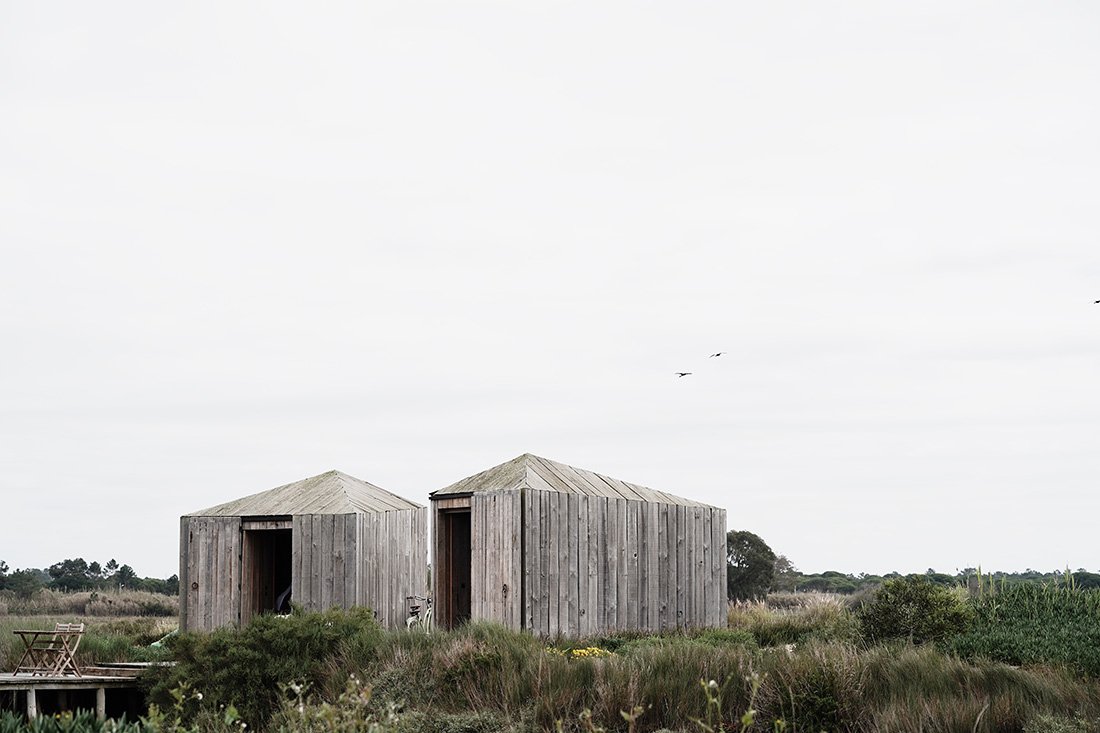
Cabanas no Rio - Photo: Silent Living by: Renée Rae, Tim Reed and Nelson Garrido
Today, the cabins remain remarkably simple. They still feel inseparable from the river and the surrounding landscape, as though they have always belonged there.
“It isn’t about creating a destination, it’s about revealing one.”
That philosophy would quietly become one of the defining characteristics of Silent Living. Rather than imposing an idea onto a place, each project begins by asking what already exists. The architecture follows. Not the other way around.
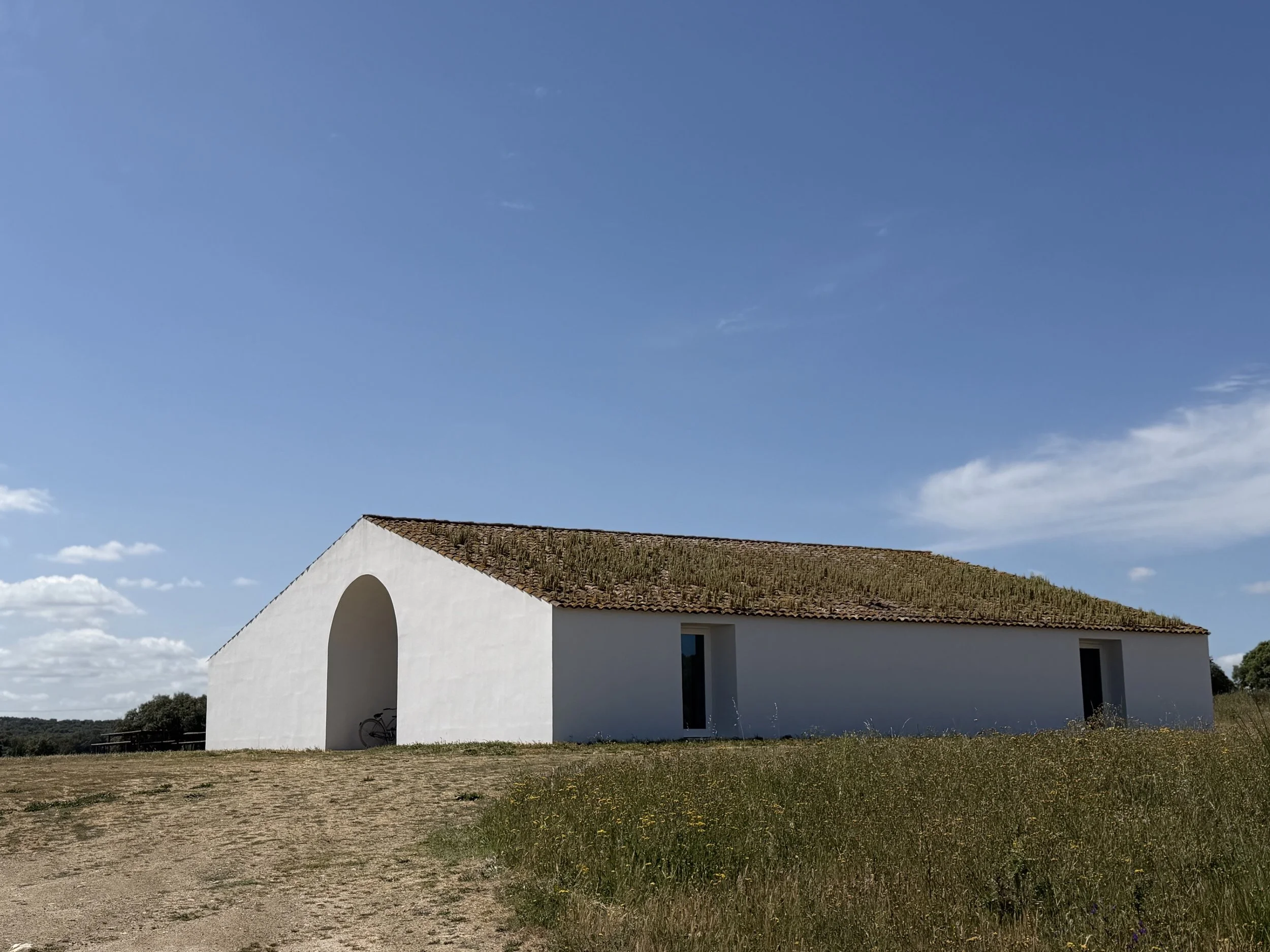
Casa no Tempo
If Cabanas no Rio demonstrated how little was needed to create a meaningful experience, Casa no Tempo explored the same idea on an entirely different scale.
The house had belonged to João’s family for generations. Instead of replacing it with something new, he and Andreia chose another path. “We decided to go back to the origins of the house.” The result is a home that feels deeply connected to the landscape around it.
Reaching Casa no Tempo is part of the experience itself.
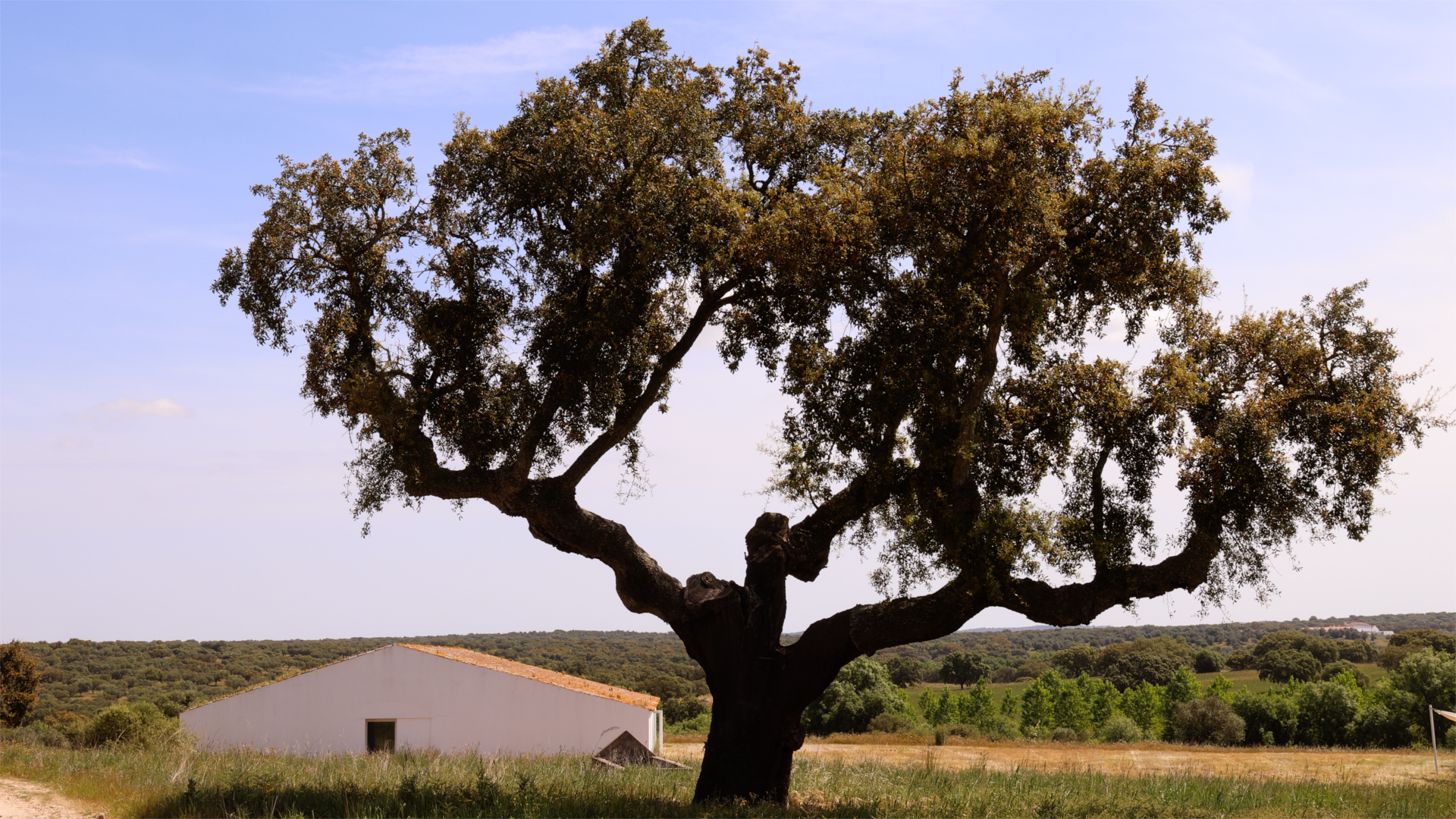
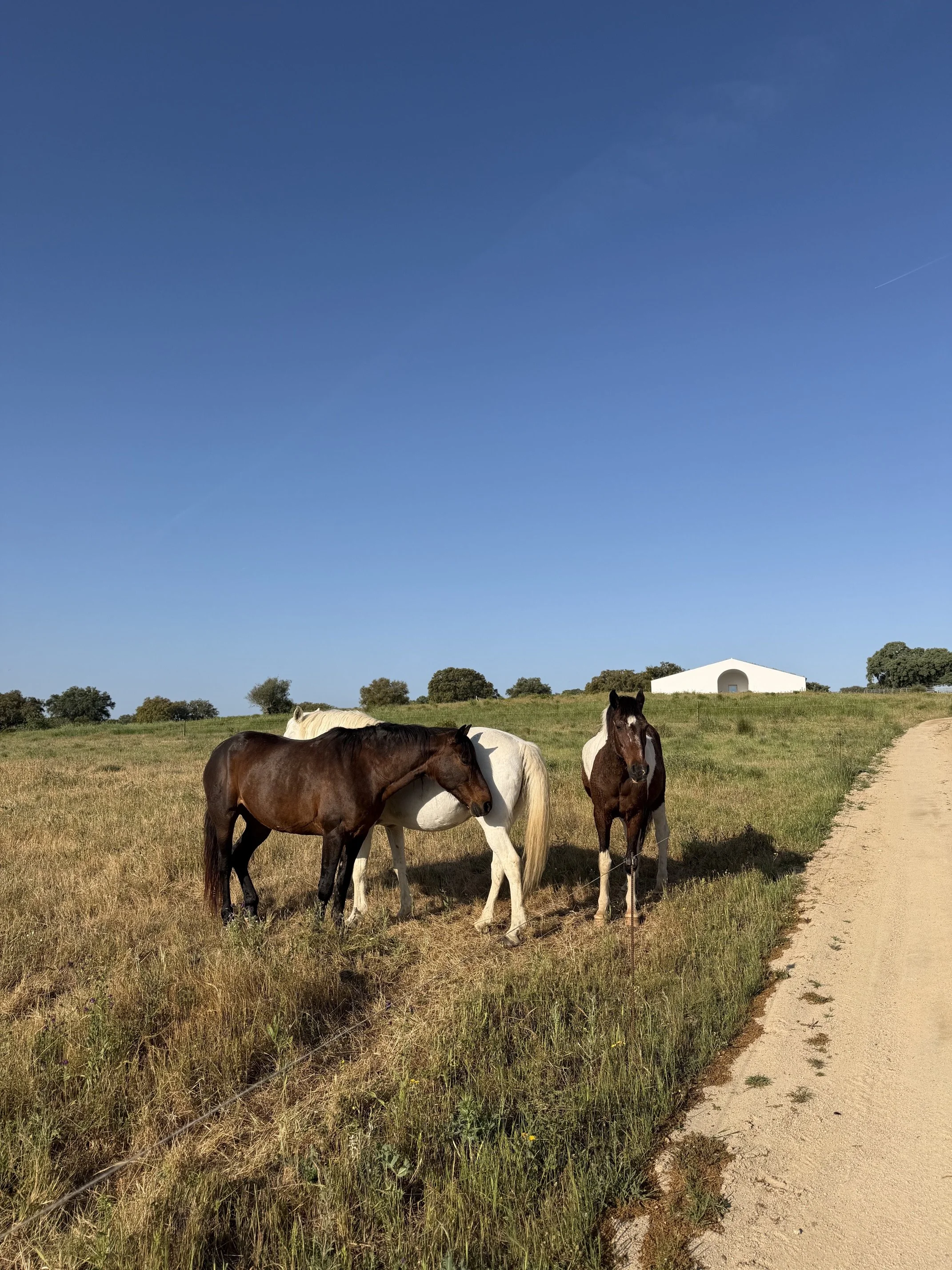
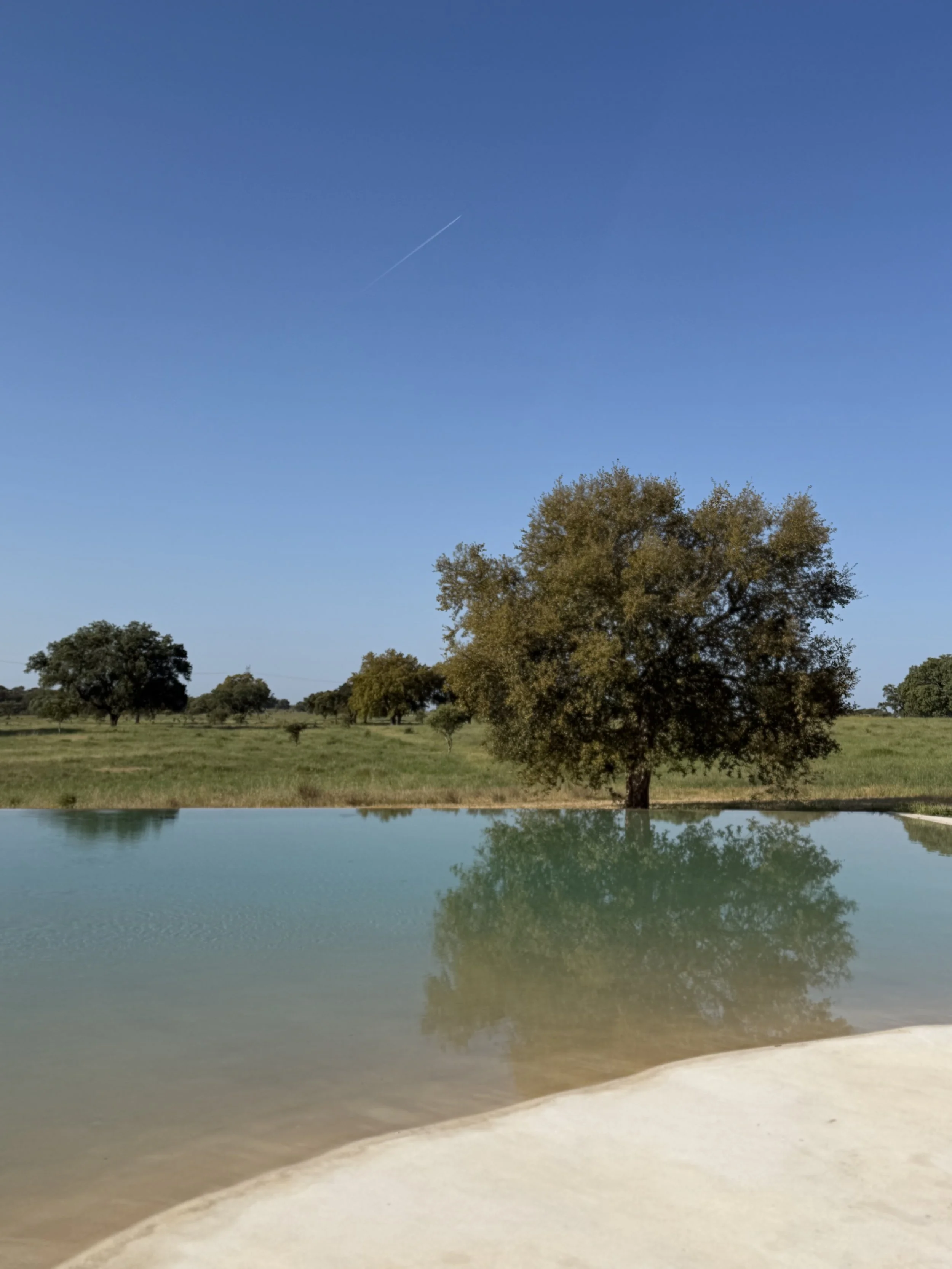
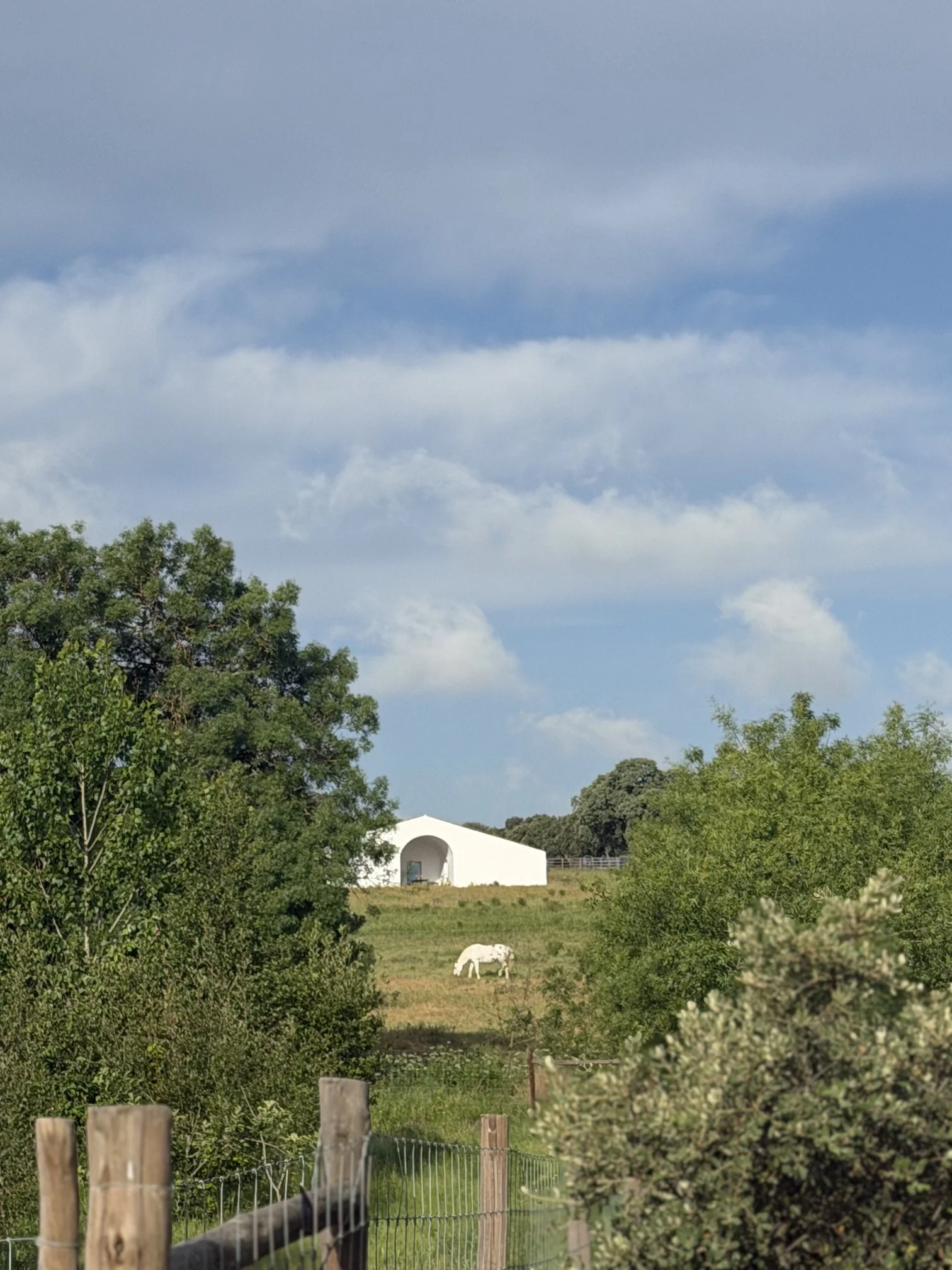
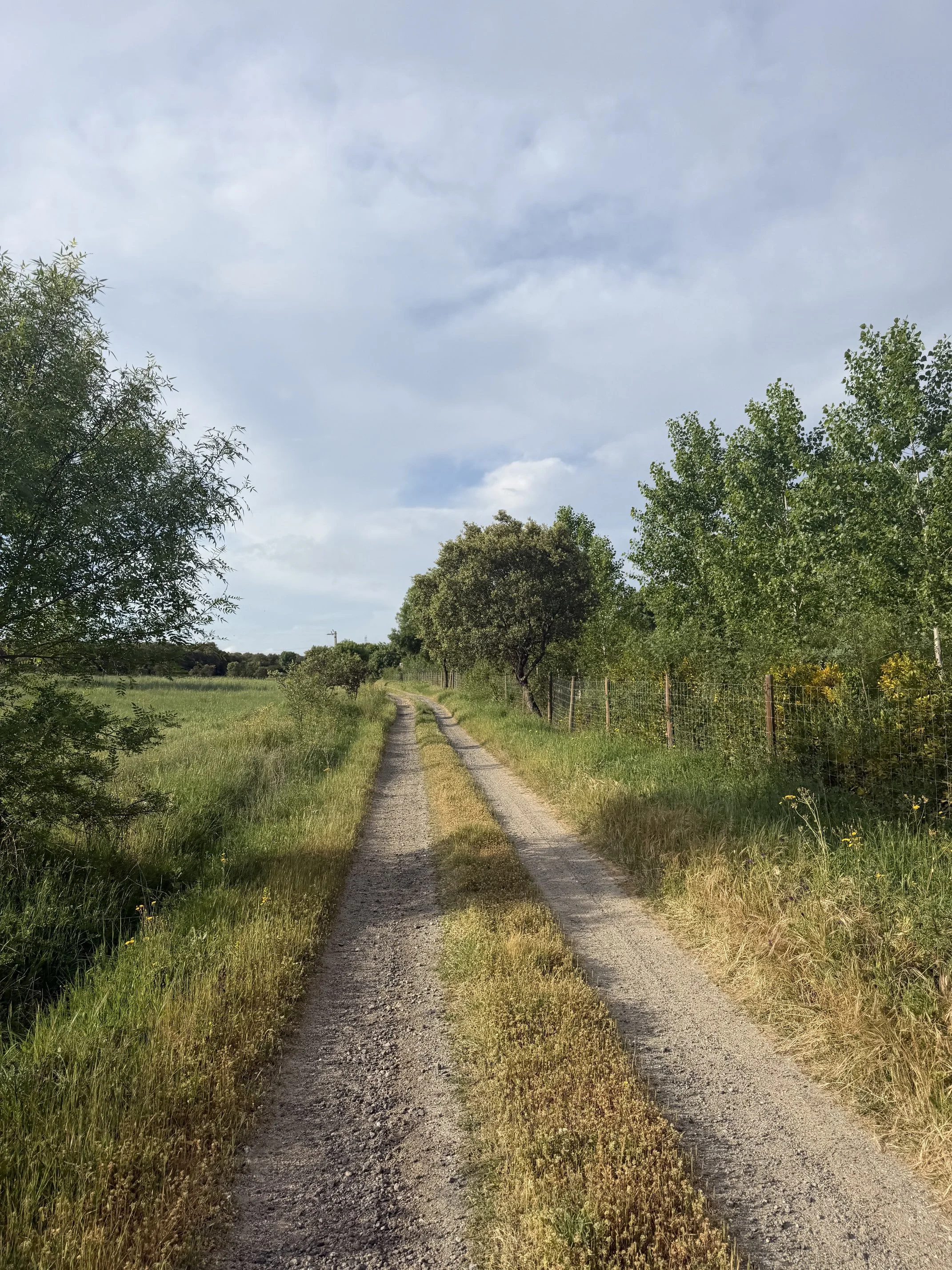
A long sandy road winds through the estate before the house gradually appears among the cork oaks and open fields. Across the fields opposite the house, horses graze quietly throughout the day. Just behind, a swimming pool has been designed with a gently sloping edge, giving it the appearance of a natural shoreline rather than a conventional pool.
There are few distractions.
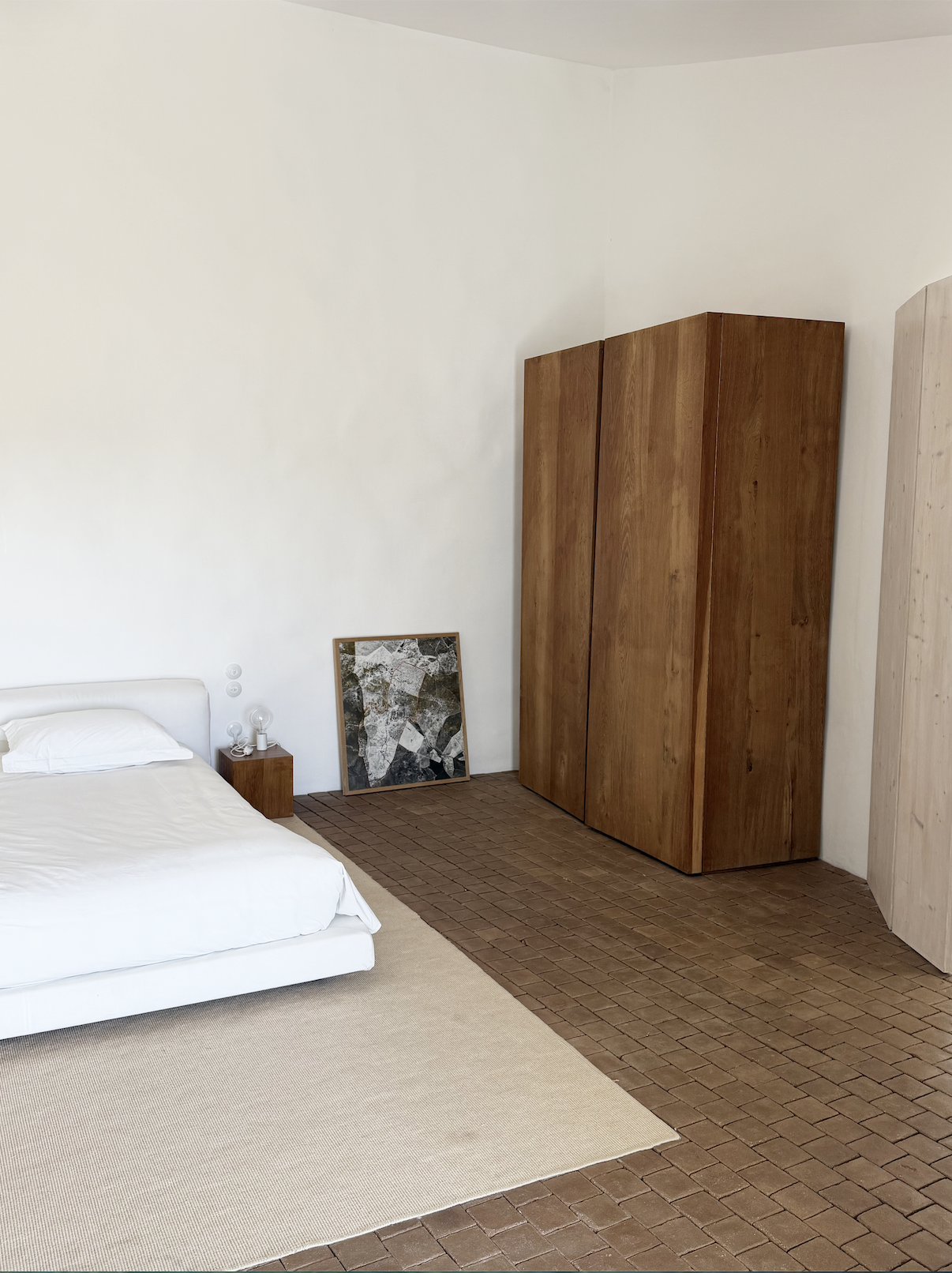
No televisions.
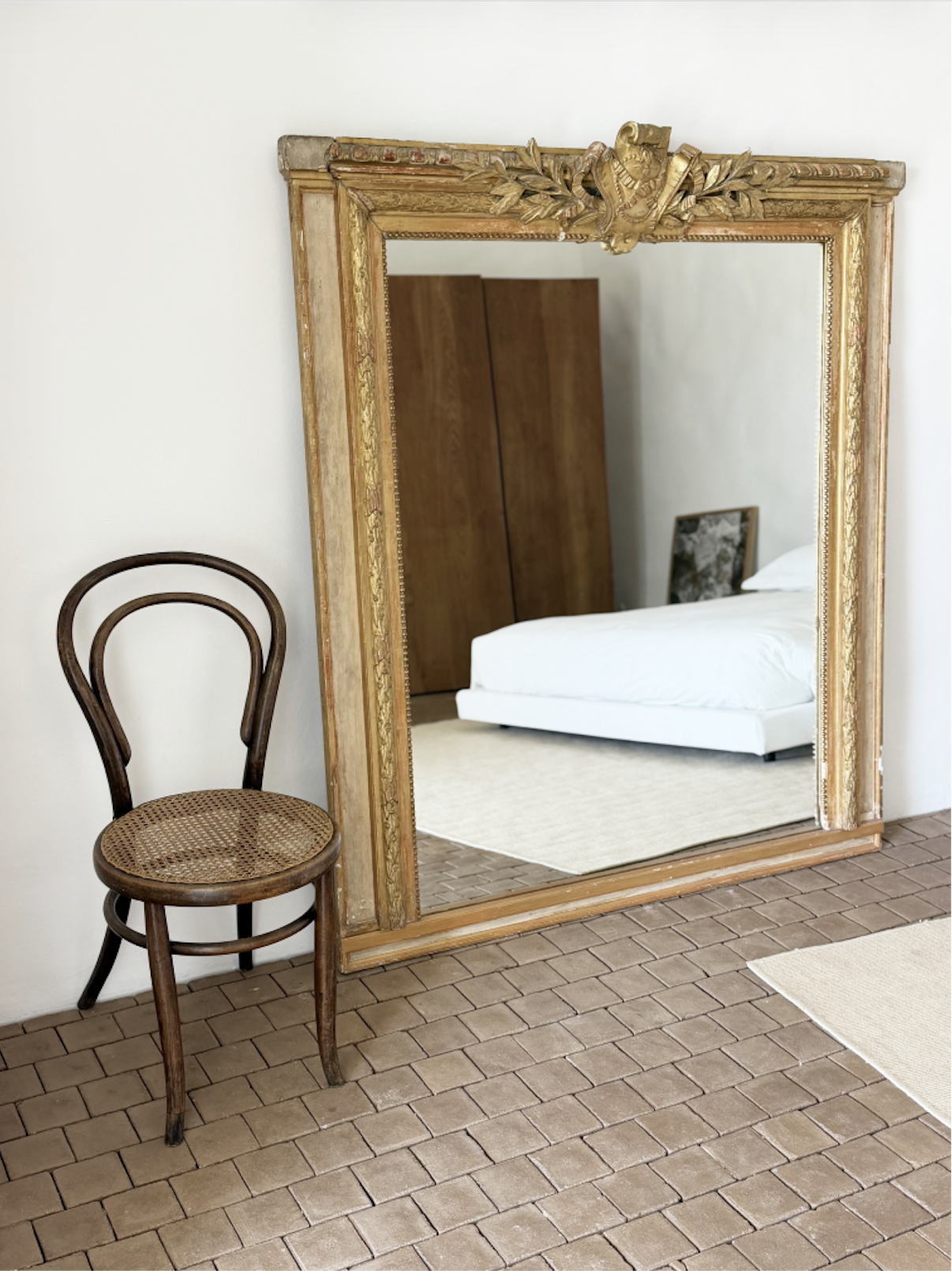
Very little artificial lighting once evening falls.
Instead, the house gently encourages guests to settle into the slower rhythm of the Alentejo.
Each morning, breakfast is prepared by two local women from the surrounding community and served outdoors whenever the weather allows. Some of the ingredients come from the estate’s small farm, where seasonal produce continues to shape the kitchen. During our visit, we wandered through the rows of strawberries, picking fresh berries straight from the small farm.
Nothing feels curated for effect. It simply feels lived with.
“There is a different sense of time in the Alentejo,” João says. “People don’t really set a time. They say, ‘I’ll come after lunch,’ or, ‘I’ll see you before the sun sets.’”
Spending time at Casa no Tempo, it’s easy to understand what he means.
Time passes almost unnoticed.
Breakfast becomes conversation.
A walk across the estate becomes an afternoon.
The architecture quietly steps back, allowing the landscape, and the people sharing it, to become the focus. It isn’t luxury in the conventional sense. It’s something much quieter. The freedom to slow down.
As our conversation continues, another side of João begins to emerge. Although he has become internationally recognised for architecture and hospitality, he rarely talks about buildings for very long. Instead, the conversation returns to nature.
To farming. To soil. To the responsibility of caring for the land. And it is here that the next chapter of Silent Living begins. It becomes clear that João’s attention has gradually shifted beyond the buildings themselves. Today, much of his time is devoted to the land.
He speaks about regenerative agriculture with the same enthusiasm that he once reserved for architecture, explaining how healthier soil, native planting and holistic grazing all play a role in restoring the landscape.
It isn’t simply about producing food. It’s about asking how the land can be healthier tomorrow than it is today.
“How can we produce very nutritious food and, at the same time, save the planet?”
It’s a question that has led Silent Living towards its most ambitious project yet: Herdade no Tempo.
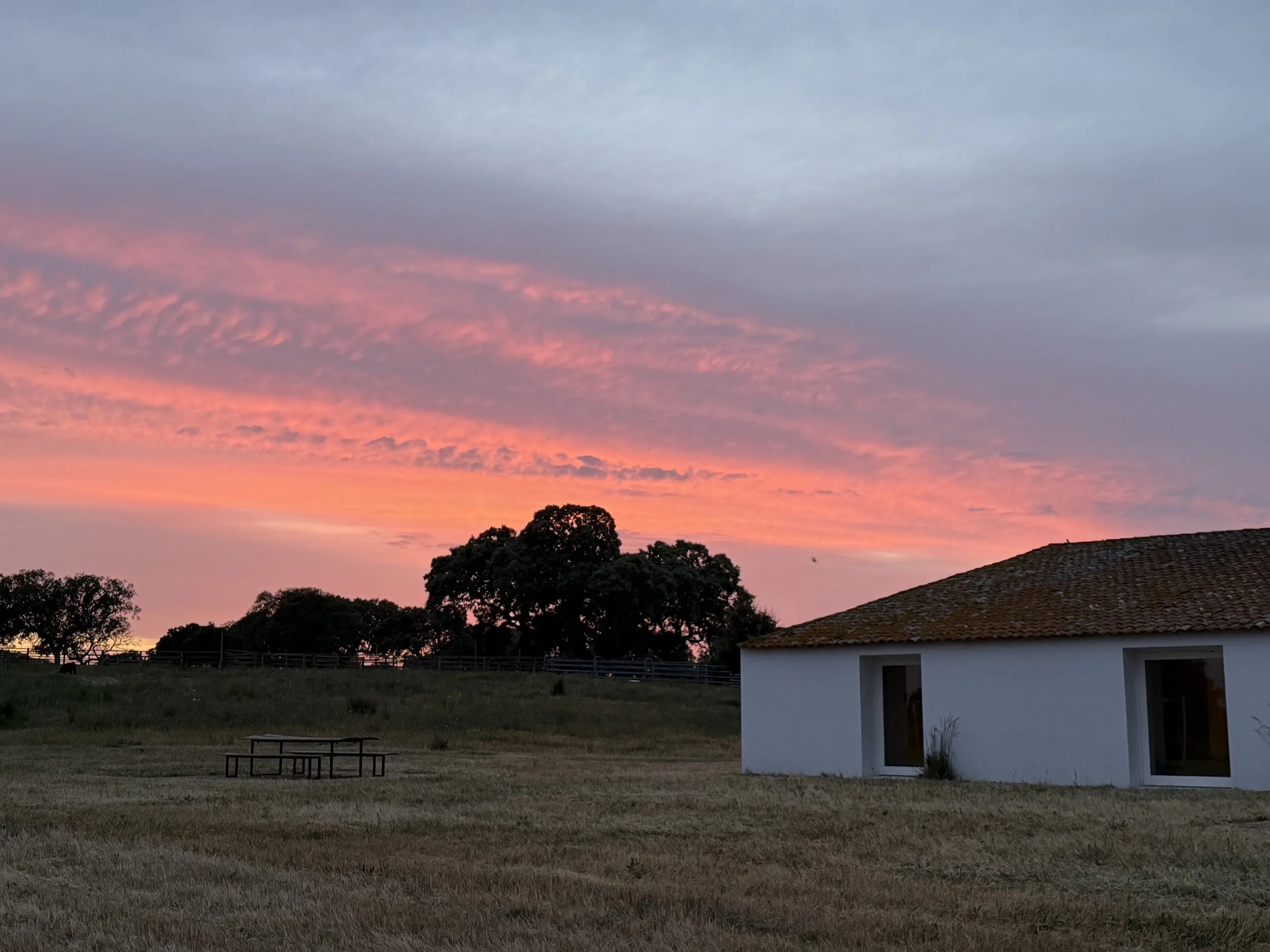
Casa no Tempo
What began as a family property is gradually becoming something much bigger.
Not another hotel. Not a conventional residential development. But a place where architecture, farming and community are inseparable. Future homes will sit gently within the landscape, while regenerative agriculture, native planting and local food production continue to shape everyday life.
The ideas that first began with a family home in Comporta now reach far beyond the houses themselves. As João describes the project, one thing quickly becomes clear.
His attention rarely lingers on the buildings.
Instead, he talks about the soil.
The native plants.
The movement of the cattle.
The long process of restoring biodiversity.
Today, more than 15,000 native shrubs are being cultivated across the estate, while regenerative farming practices continue to improve the health of the land. Perhaps that’s why João rarely speaks about the project in terms of completion. Instead, he talks about responsibility. Not only to the people who will one day experience it, but to the landscape itself. Maybe having five children has also changed the way he thinks about the future.
“I needed to live an example for their lives,” he says. “I needed to do something that they would be proud of.”
It is a simple thought, but one that quietly underpins everything Silent Living has become.
Throughout our conversation, João speaks about architecture, hospitality, farming, family and nature. Yet by the end, it is difficult to think of them as separate subjects. They all return to the same idea. How we choose to care for the places we inhabit. And how those places, in turn, shape us.
Perhaps that’s why Silent Living has grown beyond a collection of remarkable places to stay. Each project reflects the same values: generosity, simplicity, curiosity and a profound respect for the landscape that surrounds it.
It isn’t about encouraging people to travel more. It’s about encouraging them to travel differently.
Before we leave, João’s words from earlier come back to us.
“Our aim at Silent Living is this: How can we touch people’s lives during their stay? How can we leave a seed in their lives once they leave?”
Standing outside Santa Clara, those words feel less like an ambition and more like a quiet description of what Silent Living has already achieved. Perhaps that’s the quiet architecture João has been describing all along. Not simply the architecture of buildings, but of generosity.
Of family.
Of places that ask us to slow down.
And of the people who quietly change the way we see the world.
