
A conversation with Tiffany Leung Nørbygaard, founder of AETHER., on scent, ritual, and intentional living between Japan and Copenhagen

AETHER. sits in the space between memory and atmosphere, where scent becomes a way of shaping how life feels rather than how it looks. Founded by Tiffany Leung Nørbygaard, the studio draws from Japanese incense traditions and Scandinavian design sensibilities to create objects that are as much about presence as they are about material.
The work is rooted in lived experience between Tokyo and Copenhagen, two places that have shaped a sensitivity to rhythm, stillness, and the emotional weight of environments. AETHER. is not built around scent as decoration, but scent as a quiet force that can shift a room, mark a moment, and change the pace of a day. It lives in the small transitions: arriving home, beginning again, pausing in the middle of movement.
What emerges is a world where craftsmanship, ritual, and atmosphere meet. AETHER. becomes less a brand in the traditional sense and more a practice of attention, a way of returning to what is essential through something as fleeting as smoke.
Let’s start at the beginning. How was AETHER. born? When did the first spark appear, and what feeling, memory, or need shaped the idea?
AETHER. began from something very personal and almost instinctive. I was trying to hold onto a feeling I didn’t want to lose from my time in Japan. It wasn’t a single moment, but a collection of sensory memories that stayed with me: staying in ryokans in the countryside, the texture of hinoki wood baths, long walks through parks, and especially forest bathing in Yoyogi Park in Tokyo. That was my refuge when life felt overwhelming. I would go there completely overstimulated and leave feeling reset, like my entire system had been recalibrated by nature and scent.
Those experiences stayed in me long after I left. At the same time, I had spent years building for others. Working on the agency side meant shaping stories and experiences for some of the world’s biggest brands. I knew how to construct meaning, how to design emotion at scale. But eventually, I started to feel a quiet dissonance. I wasn’t creating anything that reflected my own inner world.
AETHER. came from that tension. It became a way of translating everything I had learned professionally into something deeply personal. A space where memory, atmosphere, and design could exist without compromise. It wasn’t just about building a brand. It was about building a feeling I could live inside.
What was happening in your life when you decided to create AETHER.? Did it feel like a quiet calling, or a bold leap?
It was both, but it didn’t arrive all at once. There was first a slow internal shift, a growing awareness that the pace I was living at didn’t match the way I actually wanted to feel in my life. I had spent years in a high-intensity environment, constantly building for others, constantly in motion. On paper, everything made sense. Internally, something was asking for space.
And then life interrupted that momentum in a very direct way. At 28, I was diagnosed with breast cancer, and later experienced a recurrence. There is no abstract way to describe what that does to your perception of time. It sharpens everything. It removes the illusion of endless delay. You stop negotiating with your own instincts. What had been a quiet creative pull became something impossible to ignore. AETHER. stopped being an idea I was considering and became something I needed to act on. Not because it was strategic, but because it felt honest.
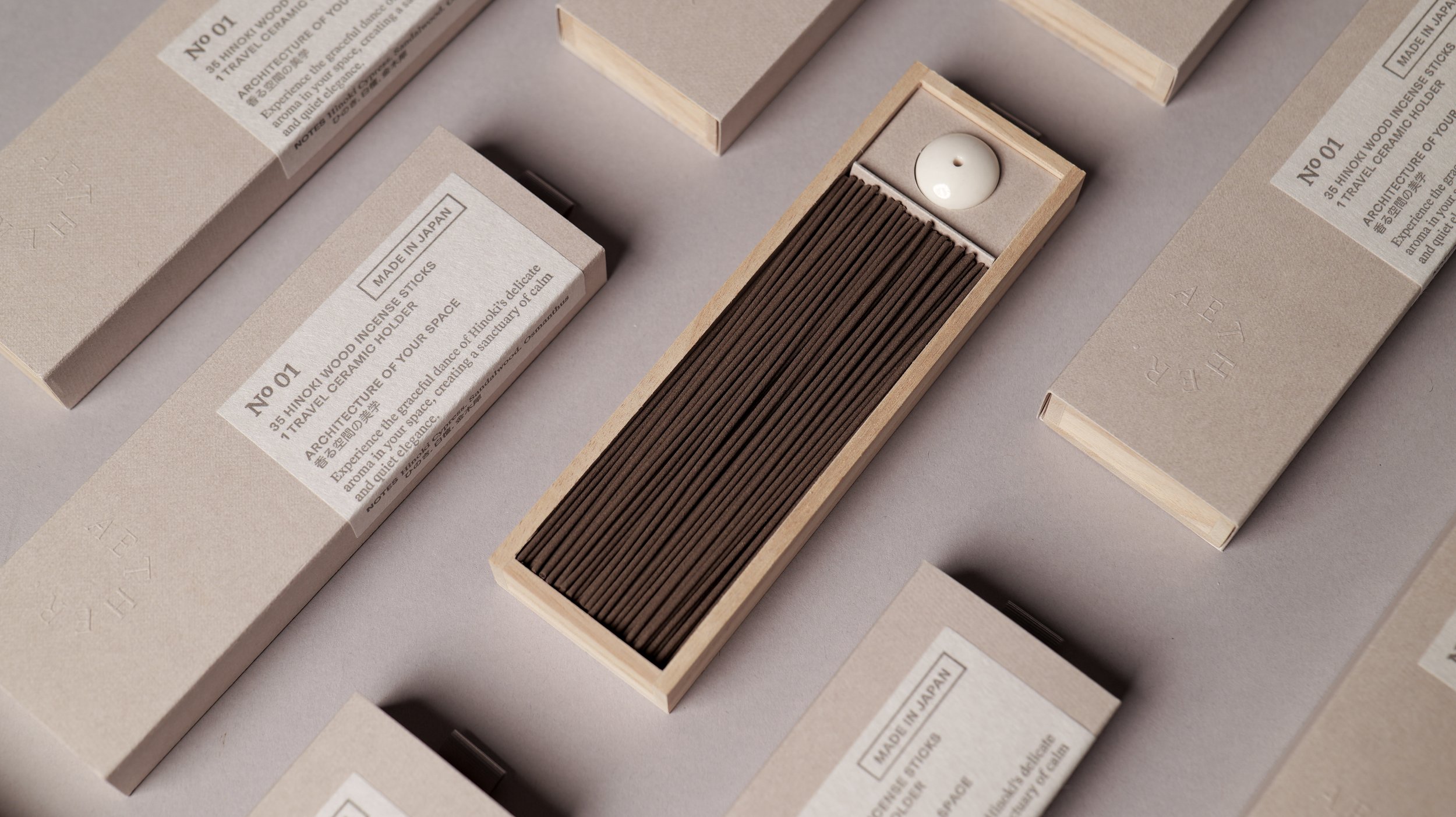
AETHER. centers around Japanese incense, such a subtle, sensory object. What drew you specifically to incense as your medium?
Scent is one of the only things that can completely bypass language. It doesn’t ask for interpretation; it goes straight into memory, emotion, and body. That alone fascinated me. But the real turning point was discovering Kōdō, the Japanese “Way of Fragrance.” It reframed scent entirely. Not as something you consume, but something you listen to. That idea changed everything for me.
In Japan, incense is not niche or decorative. It exists in daily life in a very natural way, in homes, in cafés, in spaces of gathering and reflection. It is part of atmosphere-making. When I moved to the Nordics, I noticed its absence immediately. Not as a lack in a literal sense, but as a missing layer of sensory culture. That contrast stayed with me.
Scandinavian culture already understands ritual, stillness, and intention so deeply, but it expresses it differently. I started to imagine what would happen if Japanese incense met that Nordic sensibility. Not as fusion, but as conversation. What I love about incense specifically is its restraint. It doesn’t dominate a space. It transforms it quietly. It gives you atmosphere without insisting on attention. That subtlety felt like the right language for everything I wanted to express.
Incense carries centuries of ritual in Japan. What does Japanese incense culture mean to you personally, and how do you honour that heritage through AETHER.?
Kōdō is part of Japan’s classical arts, but what fascinates me most is how alive it still feels. Historically, incense was even used to mark time during ceremonies, which I find incredibly poetic. Time measured through scent rather than numbers. But for me, the relationship to it today is not about preservation in a formal sense. It is about translation.
I don’t want to recreate ritual as something distant or academic. I want to bring its essence into everyday life in a way that feels accessible and human. You don’t need to understand its history to engage with it. You only need presence. That is the core of AETHER. It is not asking for knowledge. It is asking for attention. We honour that heritage through material choices and through process. Our incense is made by master artisans on Awaji Island, where this craft has existed for centuries. Even the packaging is made in Japan because the experience begins before the incense is even lit. It begins in the act of opening. There is a quiet respect in that continuity. Nothing is rushed. Nothing is detached from its origin.
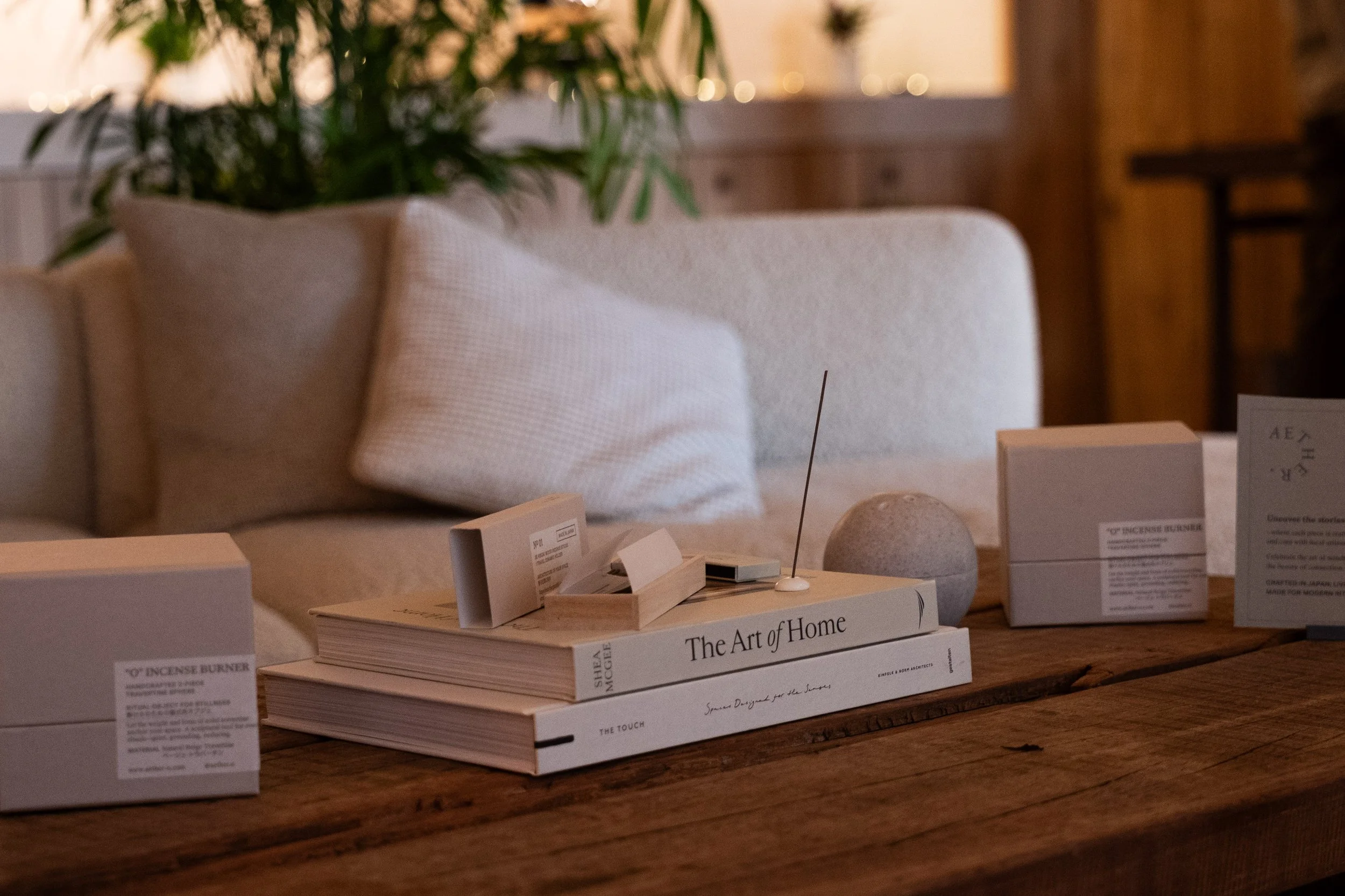
There’s something beautifully intangible about scent. It disappears even as it fills a space. What do you love most about working with something so ephemeral?
That is exactly what makes it compelling. Scent doesn’t stay. It arrives, transforms something, and disappears again. But it doesn’t vanish completely, it lingers in memory in a way that is almost impossible to control. That tension is what makes it powerful. Working with something ephemeral also changes how you think about creation. You are not building objects. You are shaping moments. And because it disappears, it asks something of you in return: to be present while it exists.
I also love that incense creates atmosphere through layering. You can shift the emotional temperature of a space with very small gestures. It is almost like composing a scene without visuals. Everything is invisible, but everything is felt. There is a kind of honesty in that. It cannot be stored, collected, or possessed. It only exists in experience.
Slow living feels closely connected to scent and ritual. What does “slow living” look like in your own daily life?
For me, slow living is not about doing less. It is about doing things with more presence.
In Copenhagen, it often looks like very simple anchors: early mornings in the sauna, cold water, long walks by the lakes, movement that clears rather than adds. There is work, of course, but it sits inside a rhythm rather than overriding it. When I travel or am in Tokyo, it becomes something more observational. Slowing down how I move through space. Paying attention to detail. Allowing moments to unfold without trying to structure them too tightly.
Lighting incense sits inside both versions of that. It is a signal. A way of saying: this moment matters enough to notice.
Is there a particular moment in your day when you light incense? What does that ritual give you?
Coming home is the most consistent moment. That transition between outside and inside life is when I feel it most strongly. Lighting incense there creates a kind of emotional reset. It marks a boundary. In the morning, it feels more like an opening. A way of setting tone before anything else enters the day. And when I host, it becomes almost invisible preparation. The room shifts before anyone arrives. The atmosphere is already doing part of the work.
It is never about performance. It is about shaping how space feels to exist in.
You live in Copenhagen but work with a deeply Japanese product. Do you see similarities between Denmark and Japan in design philosophy, lifestyle, or values?
Yes, and that connection is very real for me. Both cultures share a respect for simplicity, but not simplicity as reduction. Simplicity as intention. In Japan, that shows up through concepts like ma, the space between things. In Denmark, it shows up through hygge, the ability to create emotional warmth in everyday environments. Both are ultimately about atmosphere. About how a space holds you.
There is also a shared respect for craftsmanship and for things that are made with care rather than speed. That alignment is why AETHER. feels like it belongs between these two worlds rather than inside one of them.
What do you cherish most about Japanese culture, and what do you cherish most about Danish culture? Do they complement each other in your life and brand?
From Japan, I cherish depth of craft and the patience behind mastery. The understanding that things take time to become what they are meant to be. And also the acceptance of impermanence, of beauty that is not fixed.
From Denmark, I cherish the relationship to time itself. The way life is structured so that presence is protected, not sacrificed. There is also a quiet confidence in design here, where function and beauty are not separate ideas.
Together, they form a balance that feels very natural in AETHER. Precision and softness. Discipline and ease.
How does Copenhagen influence AETHER.?
Copenhagen shapes AETHER. in a very lived way. It is in the light, in the pace of the city, in the proximity to nature. But it is also in the culture around how people gather, move, and create. There is a strong ecosystem of studios, wellness spaces, and independent makers where presence is already part of the practice.
AETHER. naturally exists within that environment because it speaks the same language: attention, atmosphere, and intention.
For readers who haven’t been, how would you describe Copenhagen as a place to live creatively?
Copenhagen has a rare balance of intimacy and openness. It is small enough that you feel connected to people, but large enough that ideas can grow. It doesn’t overwhelm you with scale or noise, which means there is space to think clearly.
Creatively, that is powerful. You are not constantly competing with intensity. You are allowed to develop at a different rhythm.
Where do you go when you want inspiration, calm, or a good coffee in Copenhagen?
The waterfront is my most consistent place for calm. Water resets everything.
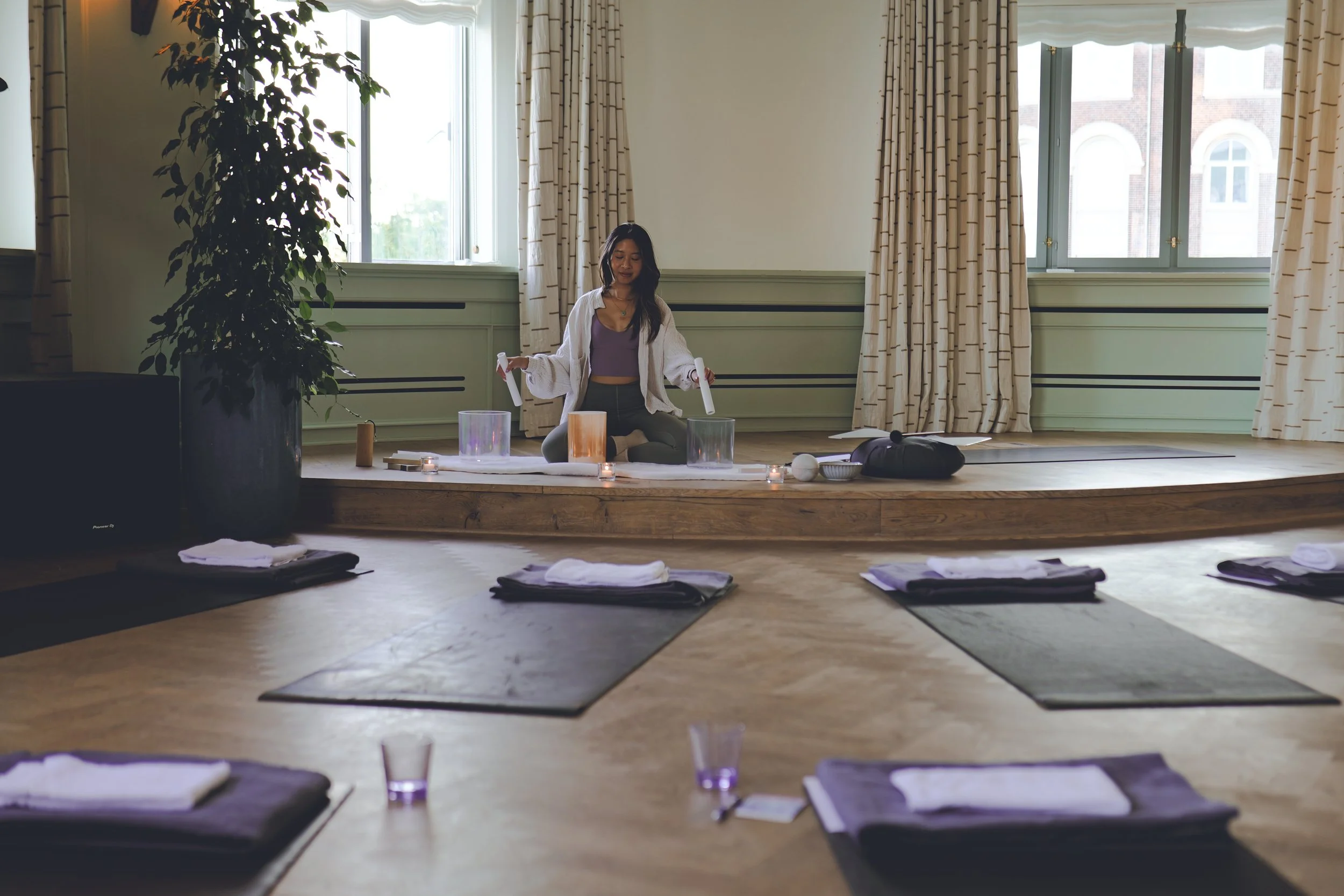
For movement, Yoga Flat and PWR8.
For quiet, I/o Japanese Tea House.
For inspiration, I wander Vesterbro and Østerbro, especially smaller cafés and independent spaces.
For food, Juno, Selfish, and Ume.
And when I need complete clarity, I leave the city entirely and go to Samsø. That distance changes how I think.
How do you approach sustainability within AETHER.?
Sustainability for us starts with restraint. Not adding more than necessary.
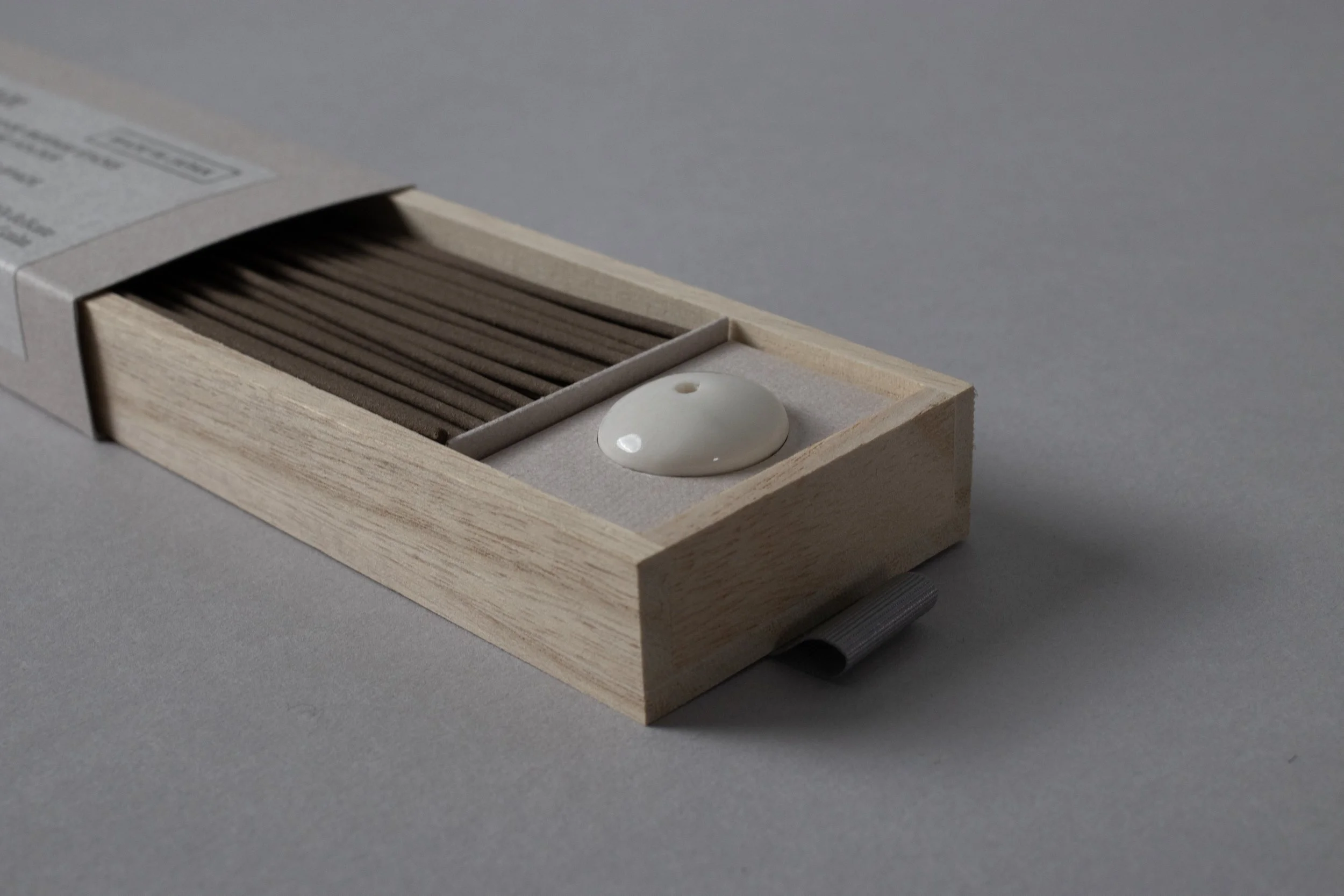
We work with natural materials and focus on longevity, both in form and in intention. The idea is not to create something temporary or consumable, but something that can be returned to again and again. Our packaging uses paulownia wood, traditionally used in Japan for preserving meaningful objects. It reflects that mindset of care and continuity.
Where can readers discover AETHER., and how important is the experience of buying it?
AETHER. exists primarily through our website and a small number of carefully chosen spaces.
We are intentional about where the brand is present, because context shapes perception. The environment in which you first encounter something becomes part of how you understand it.
The experience is designed to feel slow from the very beginning. Not transactional, but atmospheric.
Looking ahead, how do you envision AETHER. evolving?
I see AETHER. expanding into a wider world of rituals, objects, and collaborations that explore how atmosphere can exist in different forms. We are already working with studios, cafés, and creative spaces where scent becomes part of a larger sensory experience. And we continue to work closely with artisans in Japan to develop new expressions of incense that stay rooted in craft while evolving in language.
When someone lights AETHER. for the first time, what do you hope they feel?
I hope they feel a shift they didn’t expect. Not something dramatic, but something subtle enough to change the quality of the moment they are in. A sense of arrival. A sense that the space they are in is now theirs in a more conscious way.
If it does anything, I hope it creates a pause long enough for them to notice themselves again.
