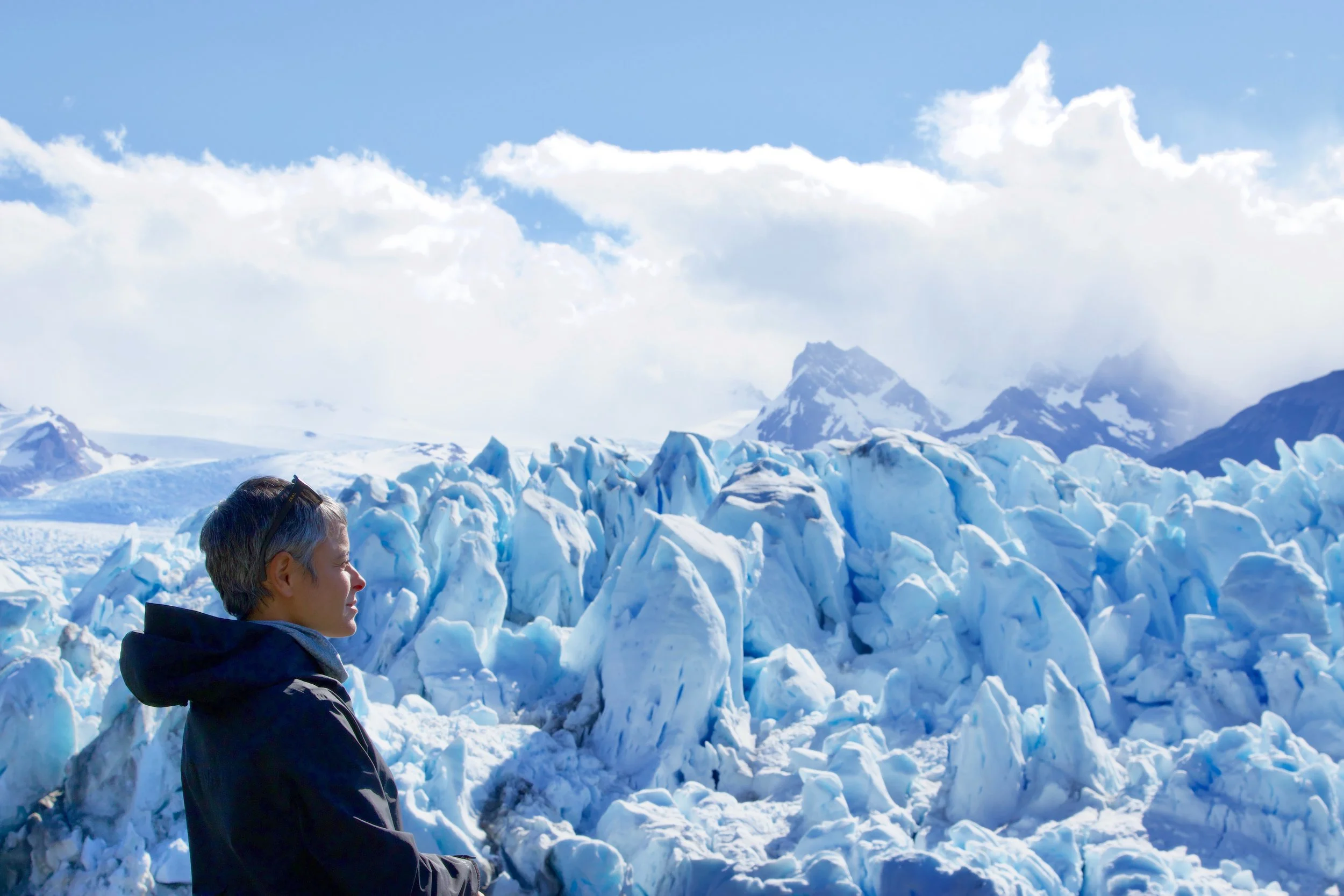
Zaria Forman - A conversation on ice, memory, and the emotional landscapes that shape us
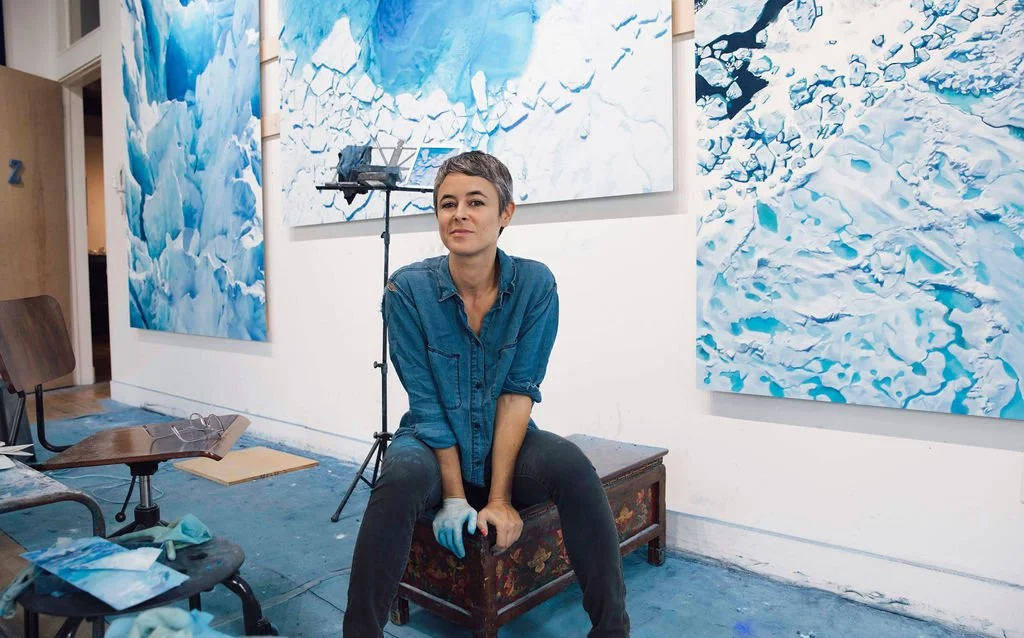
There are artists who document the world as it is, and then there are artists who allow us to feel it. Zaria Forman does both with extraordinary clarity. Known for her monumental pastel drawings of icebergs, glaciers, and remote oceans, she captures not only the fragile beauty of these disappearing places but the deep emotional undercurrents tied to them: memory, loss, awe, and our collective responsibility to the planet.
Her work has taken her from childhood travels across the globe to NASA flights over Antarctica; from quiet moments in her upstate New York studio to the vastness of polar landscapes where time seems suspended. In every drawing, she offers a chance to connect with something elemental — water, sky, light — and perhaps with ourselves.
We spoke with Zaria about the origins of her artistic path, the places that have shaped her life, and the role of art in a rapidly changing world.
Your work captures the stillness and power of ice, water, and sky in such an emotional way. What first drew you to these landscapes?
The inspiration for my drawings began in early childhood, during travels with my family to some of the world’s most remote landscapes—places my mother photographed for her fine art practice. Growing up, I developed a deep appreciation for the vastness of sky and sea: watching distant storms roll across western desert plains, monsoon rains in southern India, and the cold Arctic light illuminating Greenland’s waters.
Those experiences were foundational. They shaped my worldview, fueled my curiosity, and instilled a desire to keep exploring and learning for the rest of my life.
You’ve traveled to some of the most remote and fragile places on Earth. How have those journeys changed the way you see the planet—and perhaps yourself?
My first trip to Greenland in 2007 had the greatest impact on me. It was the first time I saw glaciers and icebergs, and the first time I learned about the climate crisis—long before it became part of everyday conversation. That experience shifted both my work and my life in a major way.
Many of your drawings feel like love letters to places that may soon disappear. Do you see your art as a way of preserving memory or inspiring awareness?
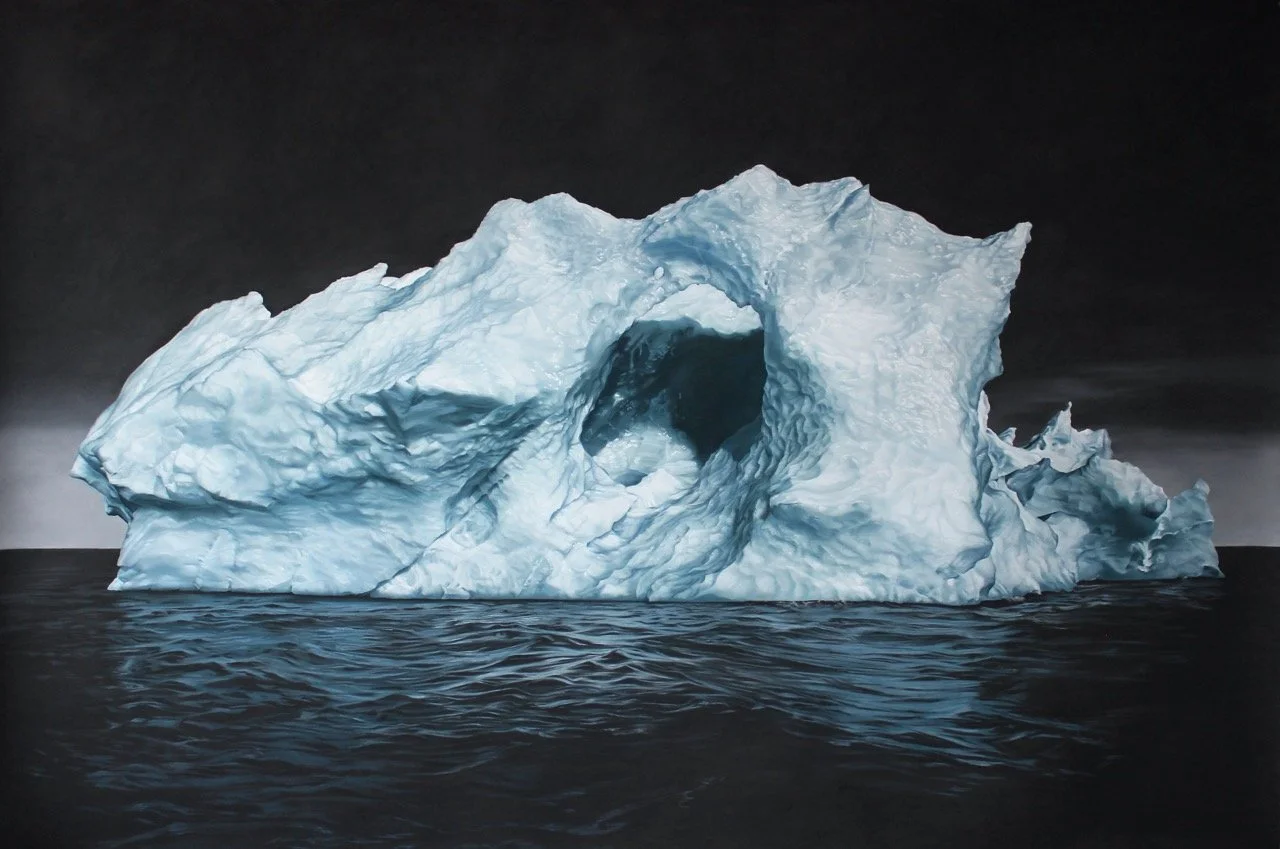
My motivation has always been to evoke an emotional connection to these dramatic, fragile places and to foster a sense of stewardship. Because few people can experience these landscapes firsthand, the scale of my drawings helps to physically and emotionally envelop the viewer—offering both intimacy and awe.
When you love something, you want to protect it. I hope to offer that connection, and yes, I also see my drawings as portraits of moments in time that no longer exist in the same form.
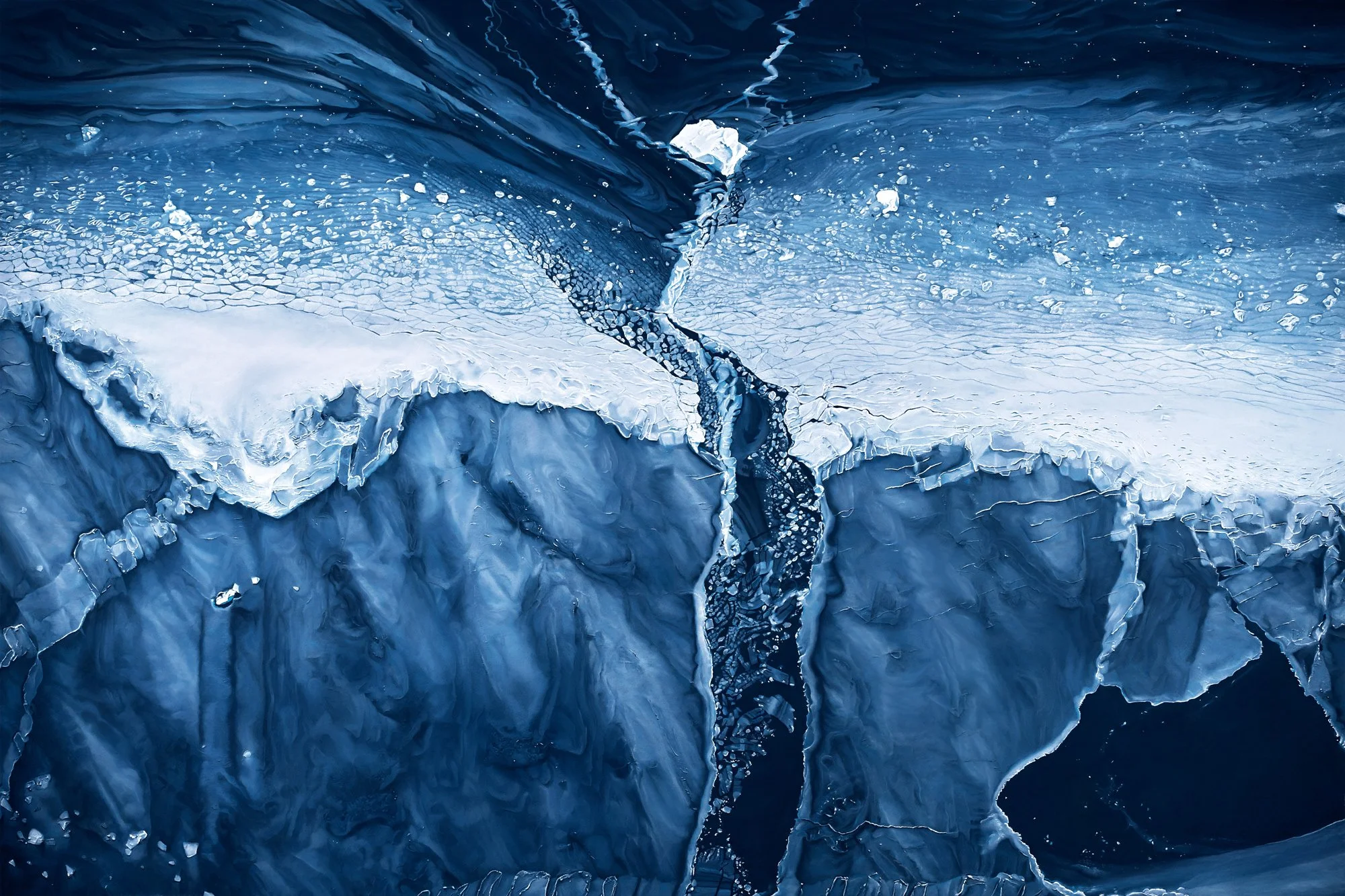
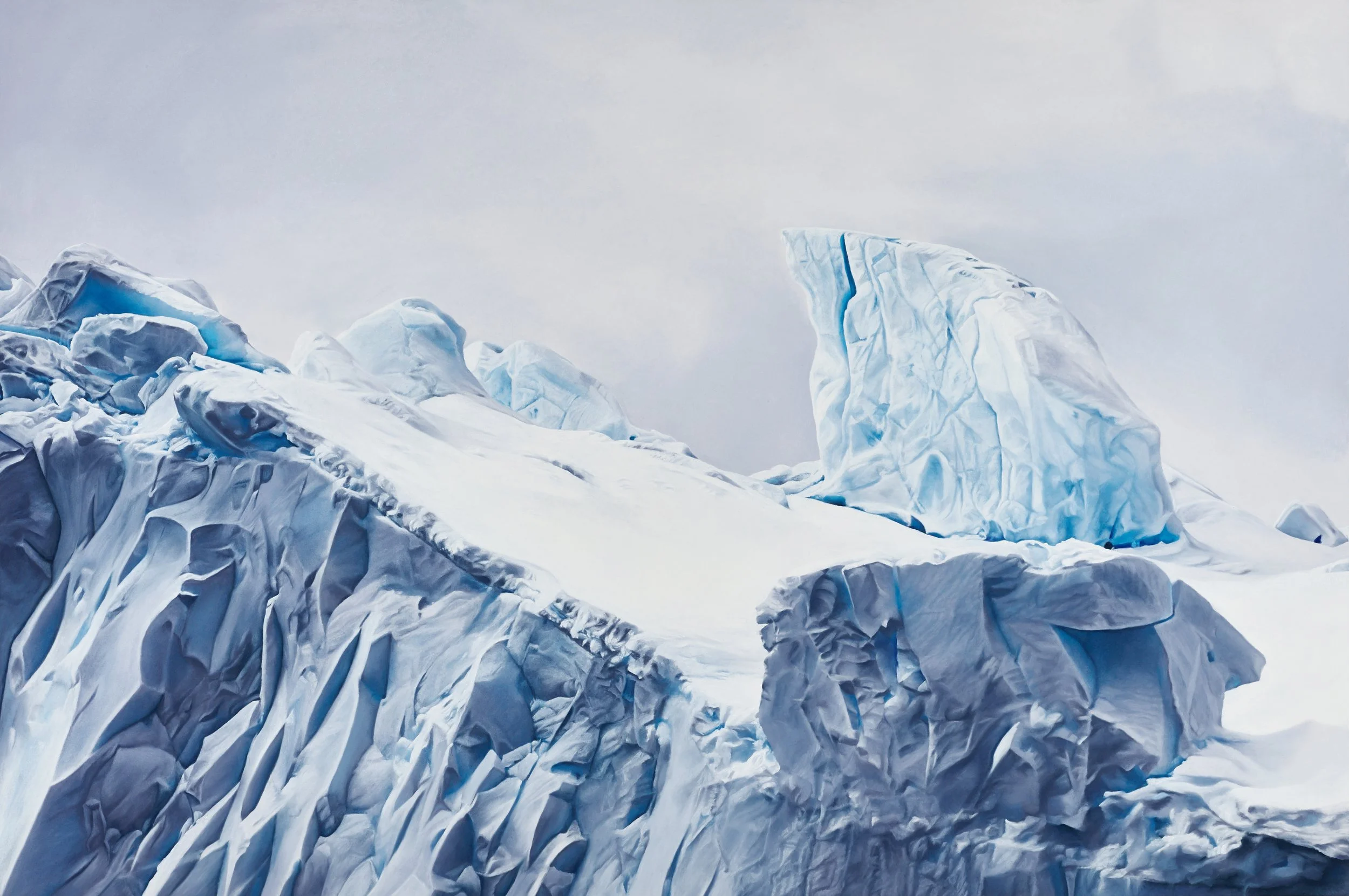
Weddell Sea-Southeast off the tip of the Antarctic Peninsula
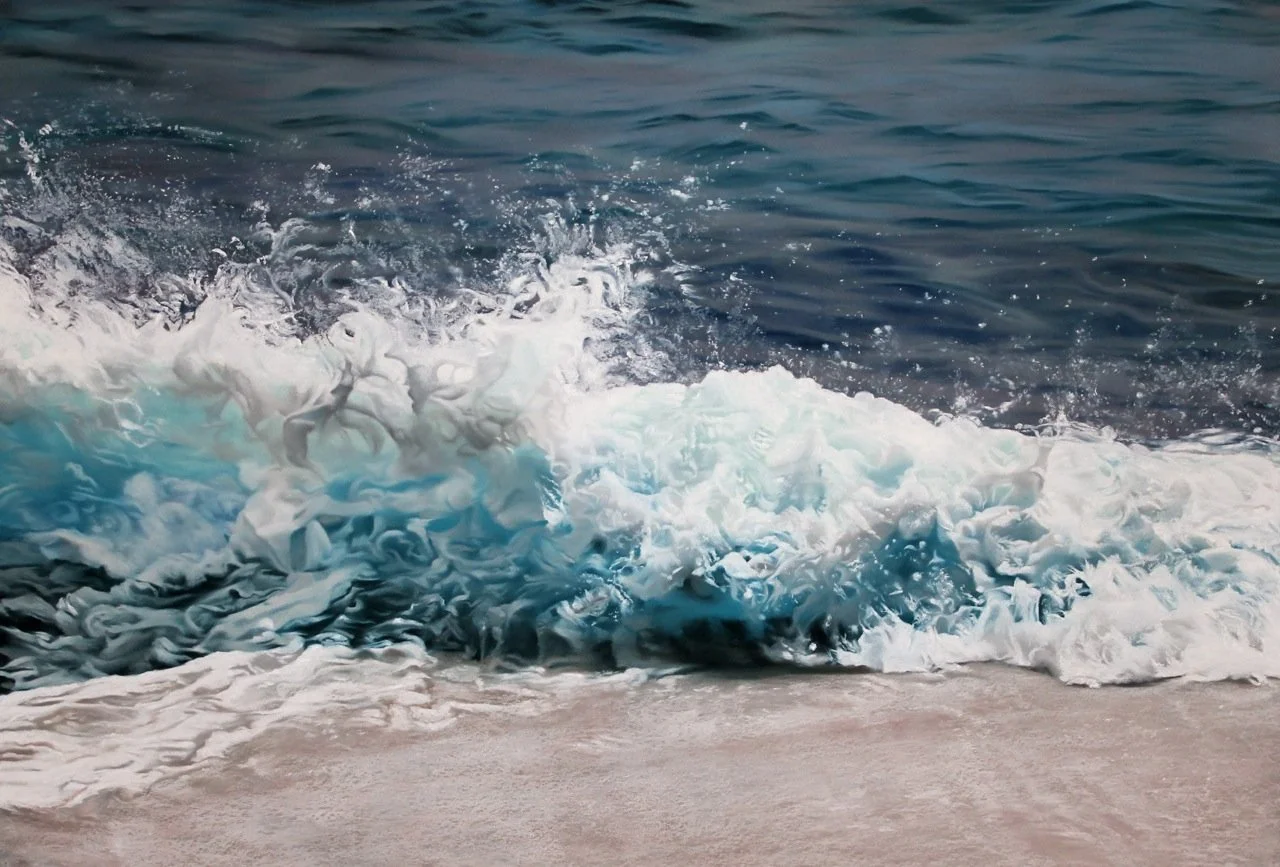
Your pastel technique has become iconic—soft yet incredibly powerful. What do you love most about working with this medium?
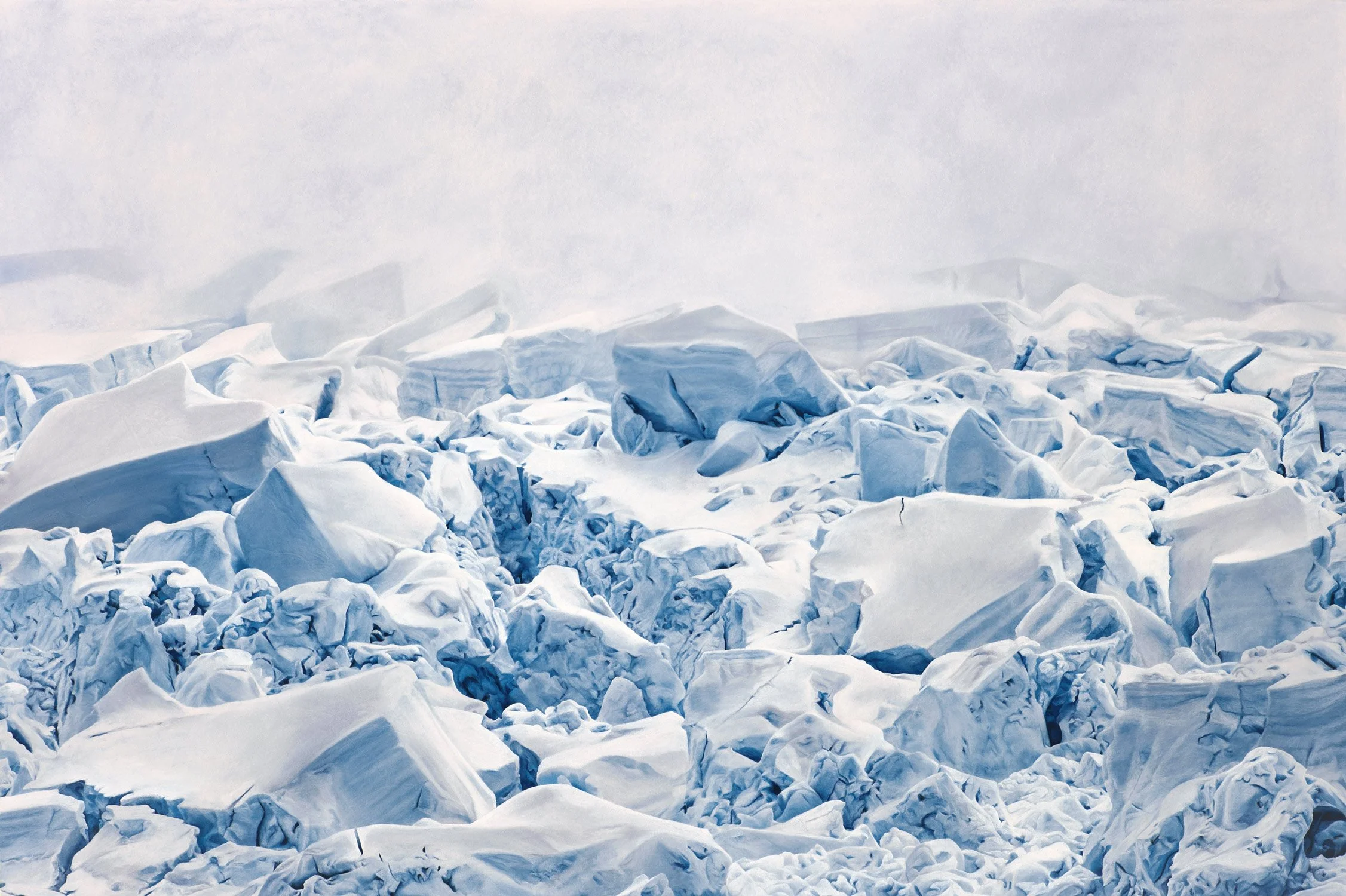
I love the simplicity of the process: cut the paper, make the marks. Pastel requires a minimalistic approach; the paper can hold only a few thin layers of pigment, so there is little room for reworking. I rarely use an eraser and instead resolve my “mistakes” within the constraints of the medium. Those limitations have taught me a great deal about letting go. Without them, I might never know when a piece is truly complete.
Growing up in Piermont, New York, you were close to both city life and nature. How did that balance shape your early creativity?
Piermont is a small, peaceful town on the Hudson River—but New York City was just a short drive away. It was the best of both worlds. My mother took my sister and me to museums and galleries constantly. Even when we didn’t appreciate it at the time, those cultural experiences had a huge impact on me and undoubtedly shaped my path as an artist.
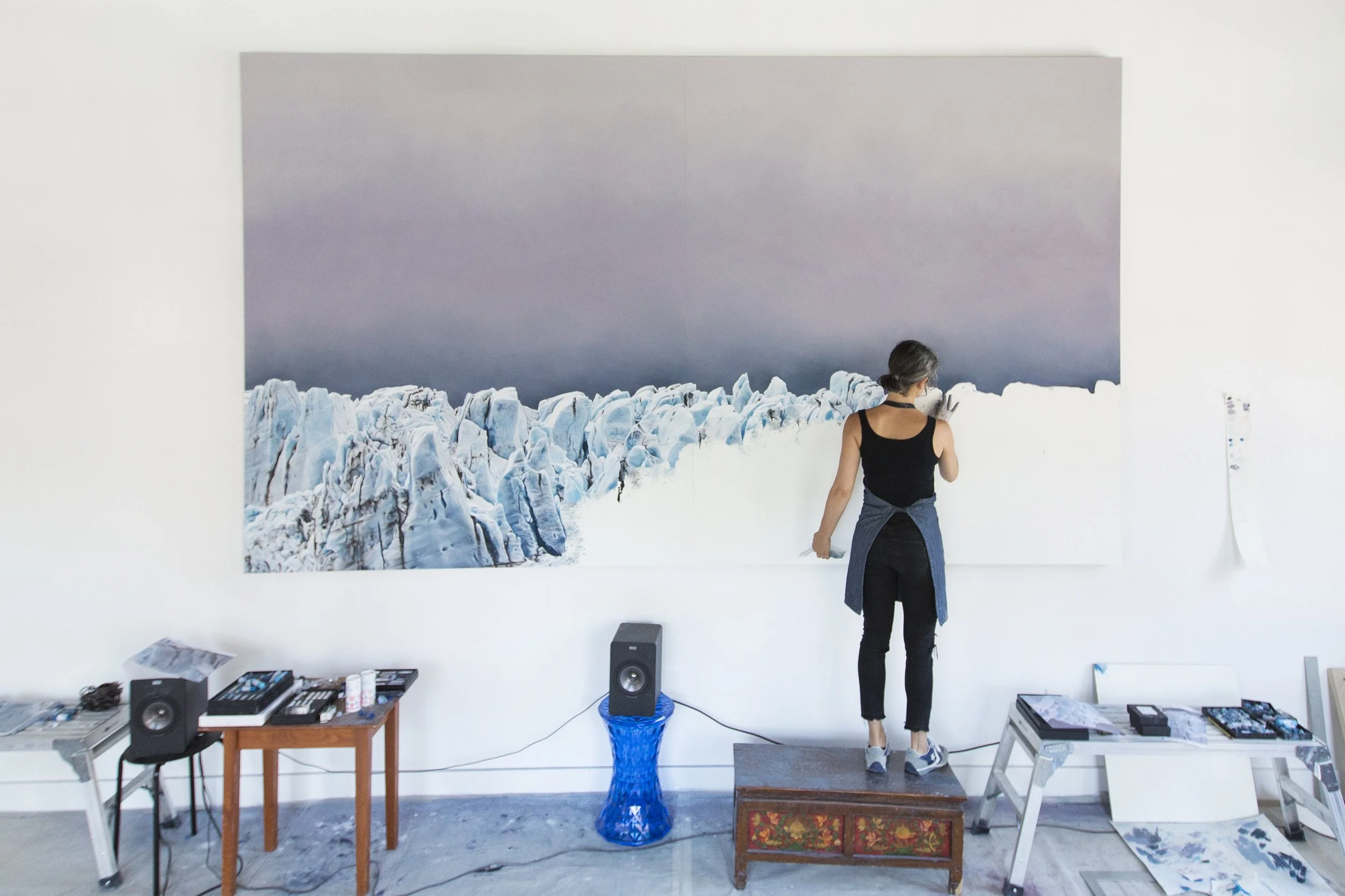
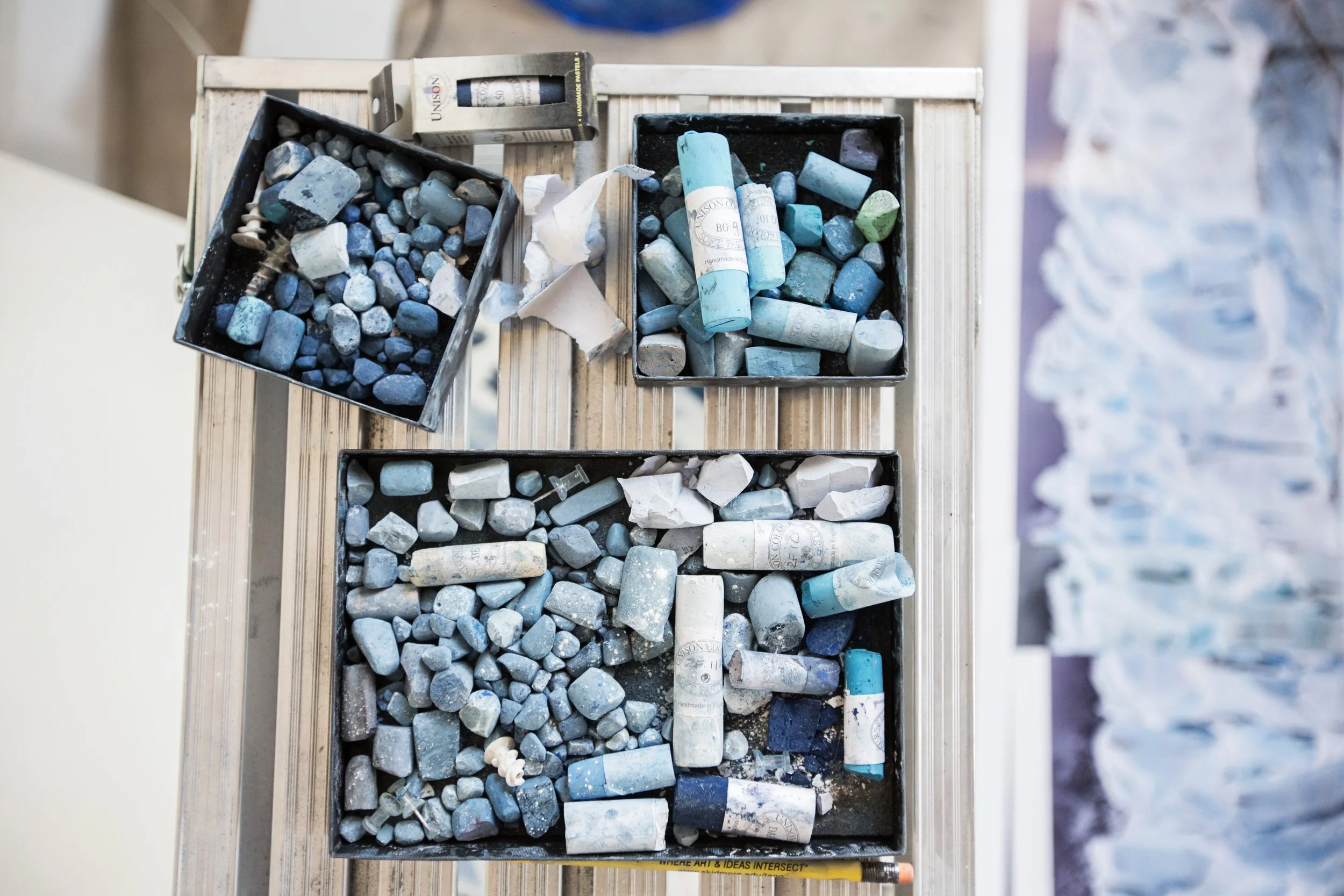
You now live and work in upstate New York. How does your environment influence your day-to-day creative rhythm?
Being surrounded by nature was a big part of why I moved here. I feel more connected to the rhythms of the natural world than I ever did living in the city. The slower pace suits me at this moment in my life.
What does a typical day in your studio look like when you’re fully immersed in a drawing?
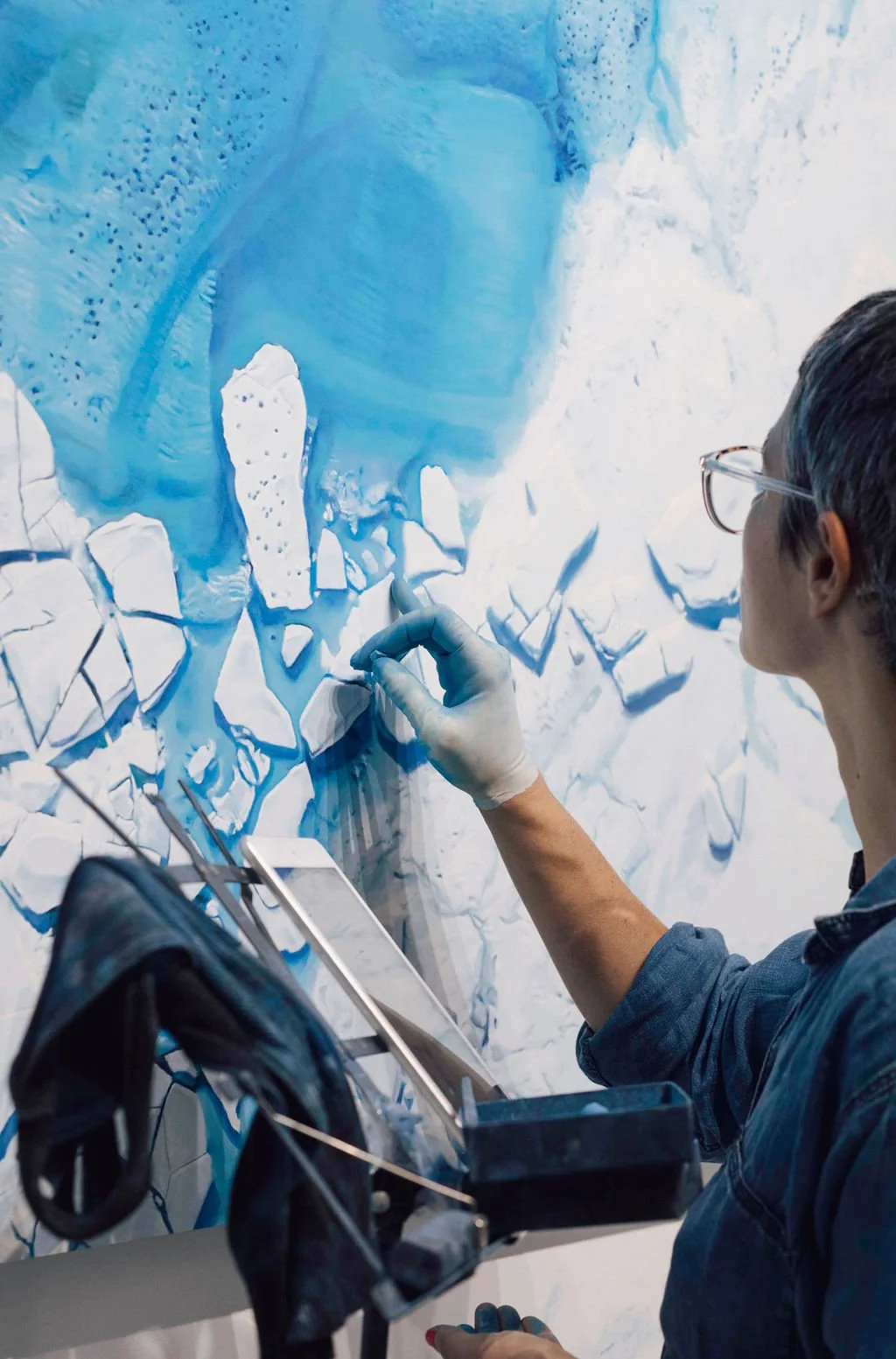
It’s rare these days—especially with a young daughter—but when I’m truly immersed, it’s glorious. I hit my creative stride in the late afternoon or early evening (right when it’s time to head home for dinner and bedtime!). When I can ride that flow, it looks like me standing in front of a drawing, making tiny hand movements, while listening to music at a volume most people would find outrageous.

Many people describe your work as meditative. Is the process meditative for you too?
Absolutely. When I’m in the flow, I don’t perceive the image as water or ice—just color and shape. I can get lost in those details for hours. Every so often, I step back to see how each section fits into the larger composition.
You often travel to document landscapes that are disappearing. What journey has stayed with you the most?
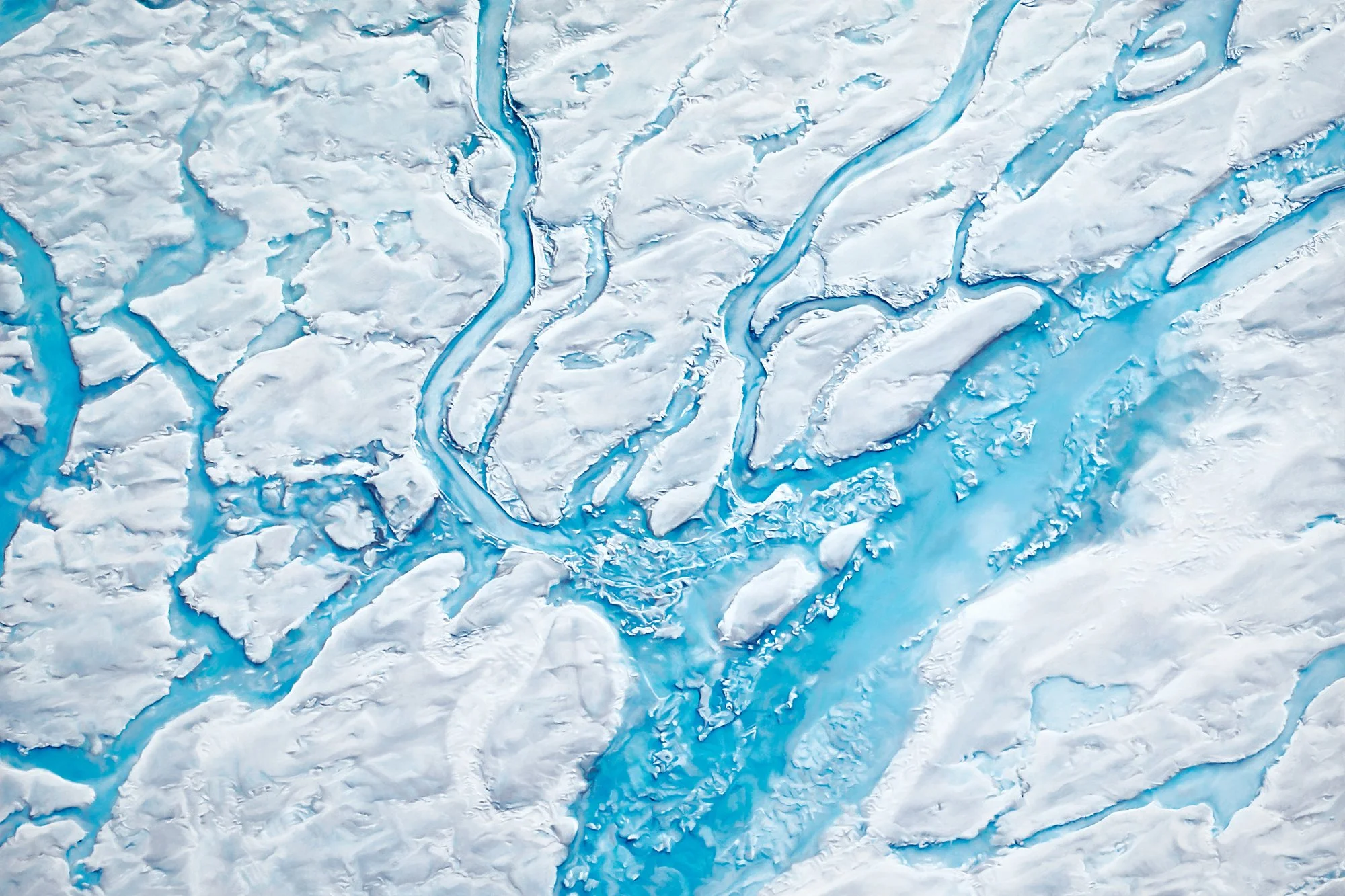
Flying with NASA was one of the most extraordinary experiences of my life. Operation IceBridge is a long-running airborne mission mapping changes in polar ice. I joined flights over Antarctica, Greenland, and Arctic Canada, observing geometric patterns in cracked ice sheets, wind-blown snow, and the deep blues shaped by time and pressure.
Even after 40,000 miles in the air, it’s still difficult to grasp the vastness of polar ice—and the speed at which it’s disappearing. Climate change can feel abstract, but these drawings are a portrait of accelerated loss and a call for faster action.
What’s something people might be surprised to learn about the way you work or prepare for an expedition?
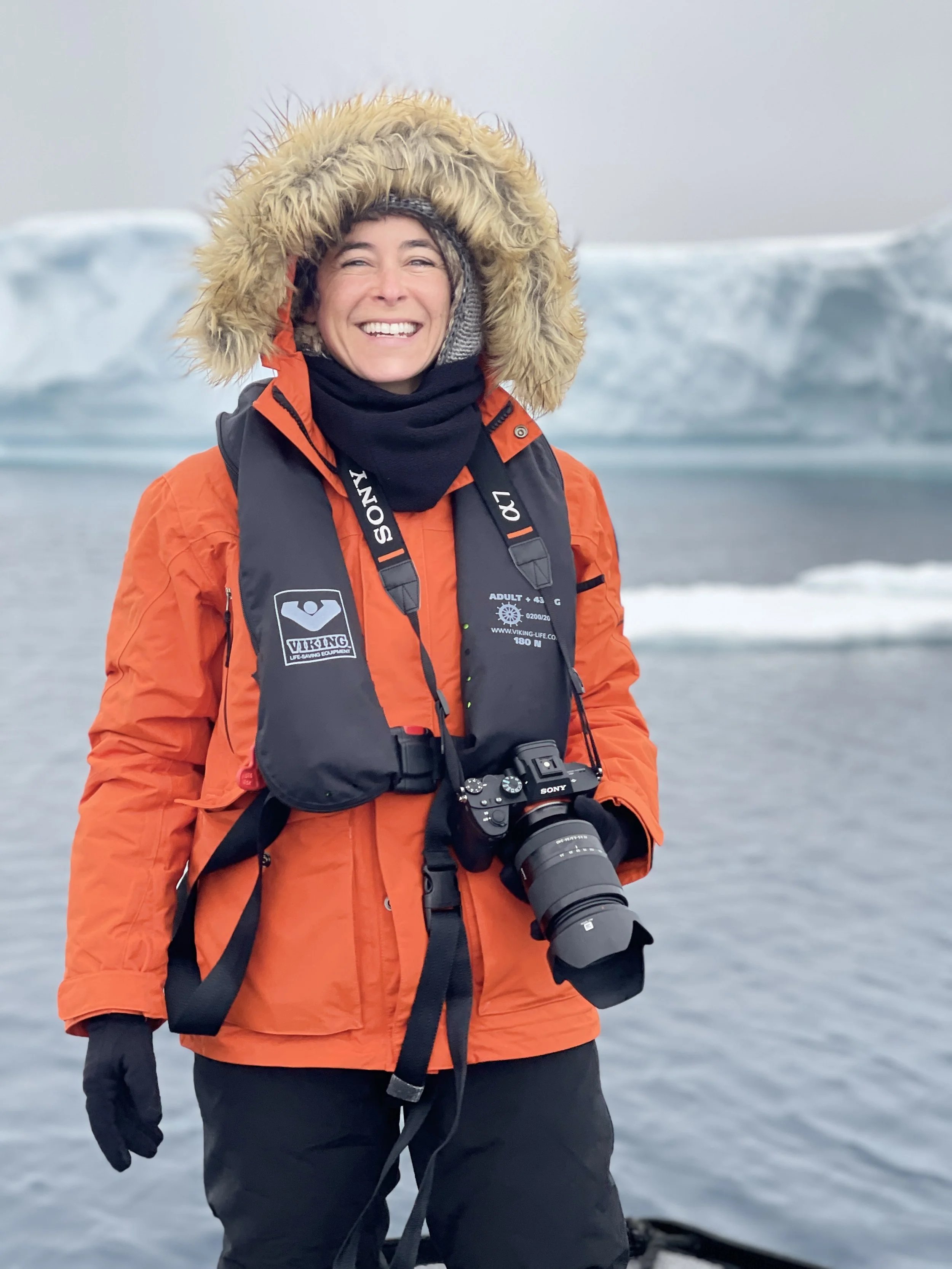
I don’t usually bring art supplies or make sketches on-site. I want to spend my time fully experiencing the place—with my eyes, my body, my camera—and let the drawings come later.

You’ve spoken about your mother’s influence on your artistic path. How does her spirit continue to guide your work?
Revisiting Greenland, a place she loved deeply and where I spread her ashes, allows me to connect with her in a profound way. Lately, I’ve been reading her journals and looking through her contact sheets, which has inspired new ideas and new ways to continue collaborating with her.
What do you do to reconnect with yourself when you need rest or inspiration outside the studio?
Spend time with my community—and dance!
Has your understanding of “sustainability” changed over the years?
Yes. For a long time, I worked at a pace that wasn’t sustainable. I’ve learned to say no, even to wonderful opportunities. At home, we reduce waste, avoid plastics, compost, and use solar energy. But I also believe focusing only on individual actions is what the oil and gas industry wants—it distracts from the systemic change we need. Voting for leaders who prioritize the environment is one of the most powerful actions an individual can take.
What do you think the world needs more of right now?
Kindness and empathy.